Keys land on the nearest surface, shoes collect behind the door, and a new console makes the hallway harder to walk through. The problem is not always insufficient storage. It is storage in the wrong form or position. Narrow entryway ideas work best when they provide a place for daily arrivals while preserving a clear route into the home.
Start with the objects that arrive with you, the people who use the entrance, and the door's full movement. A household with backpacks and wet shoes needs a different arrangement from someone who mainly needs a key tray and a place for a coat. Choose the smallest useful system rather than filling the wall with a complete entryway furniture set.
Identify the point where things accumulate
For several days, observe what is put down and where. Keep categories simple: things that leave again tomorrow, things waiting to go elsewhere, and items that need a permanent home here. This distinction matters because a landing surface can quickly become long-term storage when there is no onward destination.
Mark the door swing and any route to other rooms. Include a closet door, heating equipment, and other fixed features. Measure the space at the narrowest useful point, not just the widest part of the hallway. A cabinet that fits beside the entrance may still create a squeeze farther along.
If several people arrive together, test the entrance in that condition. A layout that works for one empty-handed person may fail when someone is removing shoes while another carries groceries. The aim is to reduce these repeated conflicts, not simply make the empty hallway look orderly.
Why the standard console sometimes fails
Depth is the obvious issue, but it is not the only one. A table may be shallow enough yet have legs that catch bags, a lower shelf that blocks feet, or drawers that open into the passage. Measure the whole working footprint and assess it from the way people actually approach the entrance.
An open table also leaves every object visible. If mail, cables, and loose accessories accumulate there, buying a prettier tray may only organize the clutter into a more attractive pile. Decide which items genuinely belong at the door and give everything else another destination.
In some homes, the best console is no console. A small appropriately fixed shelf, an existing closet, or a defined spot farther inside may perform the task better. Let function determine the furniture category rather than assuming a narrow foyer must include a miniature table.
Solution one: separate landing from storage
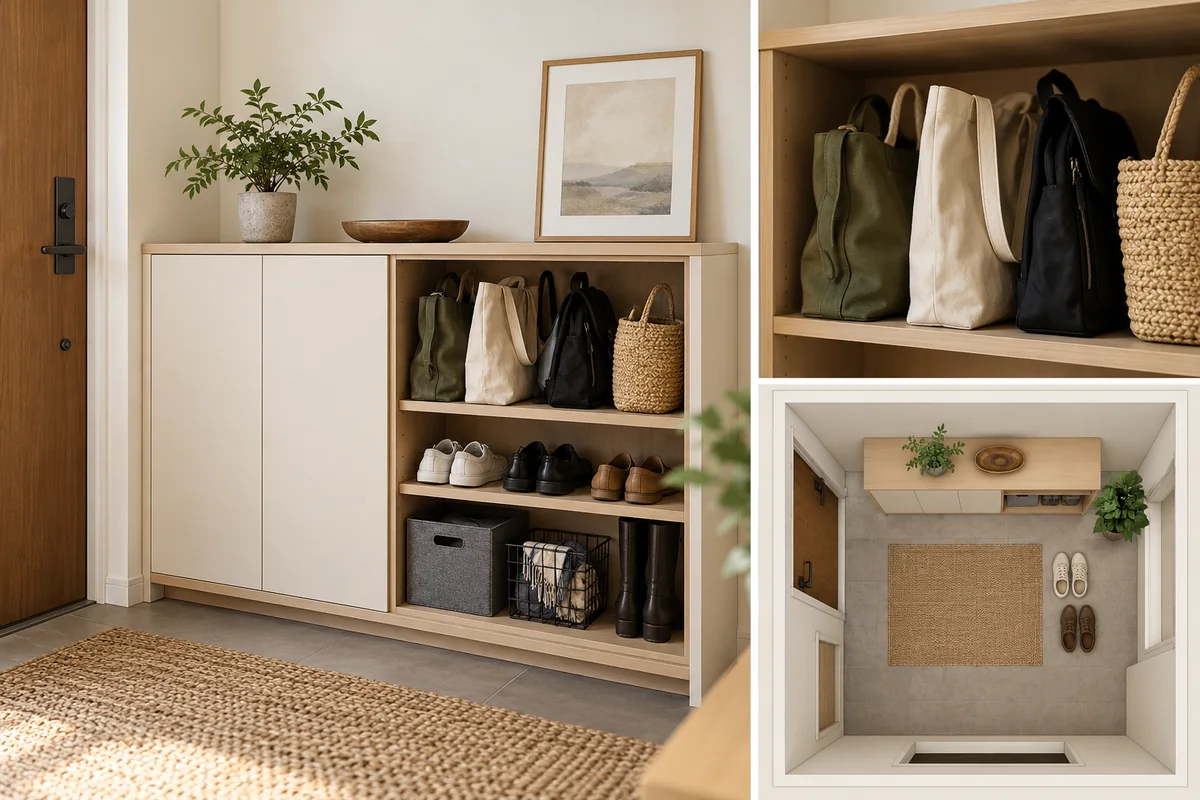
Provide a small surface for immediate essentials and a different place for things that stay. Keys and a frequently used access card might fit in a shallow dish. Shoes need their own arrangement. Bags may need a secure hook or shelf positioned so they do not project into the route.
This separation gives each area a capacity limit. When the key dish holds receipts, packages, and spare batteries, it signals that those items need moving rather than that the dish needs replacing. A small landing zone works when the household can reset it quickly, without sorting a complicated collection of containers.
If you use a wall shelf, follow the product's load and fixing instructions and check the wall construction. A slim shelf is not safe simply because it is small. Keep projections clear of regularly used routes and consider the needs of children, pets, and anyone moving through with mobility equipment.
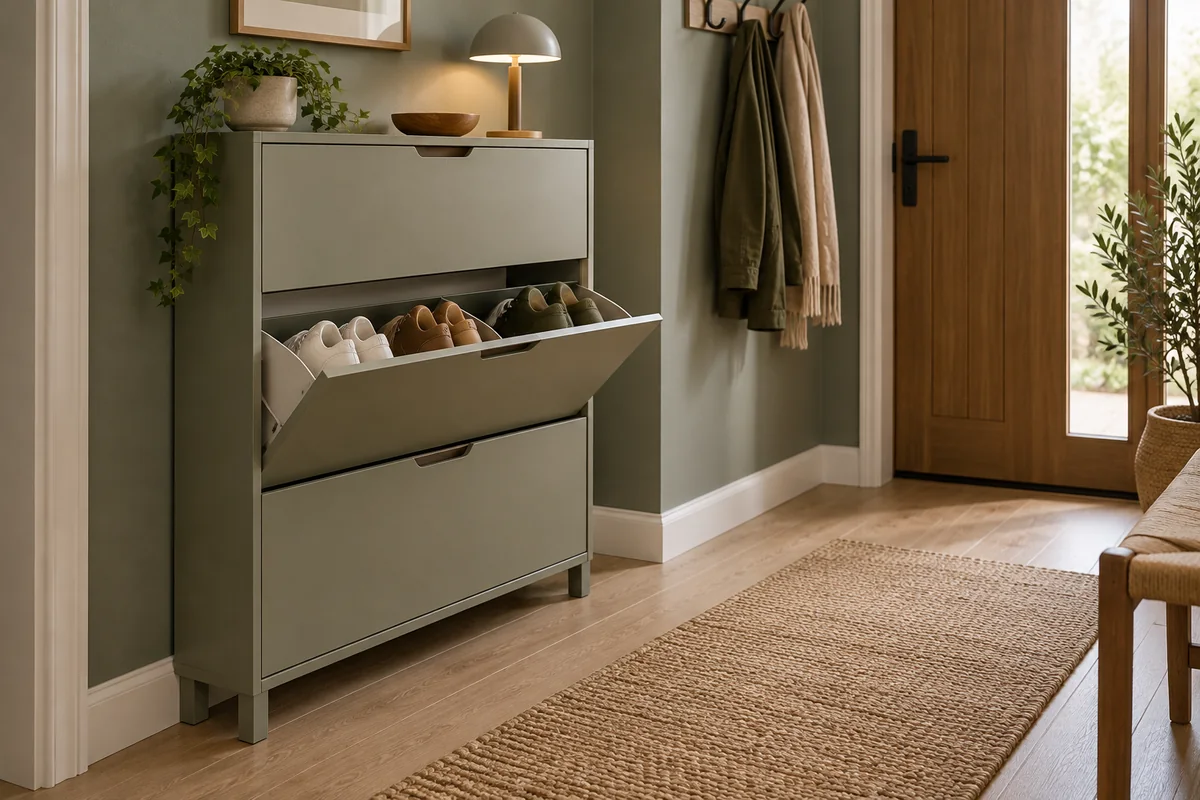
Solution two: use a shallow cabinet where doors can work
A shallow closed cabinet can conceal small daily items, but compare the available internal depth with the objects you want to store. Footwear varies considerably in size and shape. A product photograph with a few slim shoes does not prove that boots, larger shoes, or the household's actual quantity will fit.
Check the open condition. Tilting compartments, hinged doors, and drawers each need a different operating space. Make sure the cabinet can be used without trapping someone between the open part and the opposite wall. Where necessary, use another location rather than reducing the route beyond what is appropriate.
Secure the unit as directed. Australia's Product Safety guidance on toppling furniture explains why anchoring matters. Do not assume a cabinet's shallow profile makes restraint unnecessary, and do not improvise a fixing method without knowing the wall and product requirements.
Solution three: make hooks earn their space
Hooks save floor space only if what hangs on them stays out of the way. A bulky coat or backpack can project farther into a hallway than a shallow table. Test the arrangement with the actual items, including the number that arrive on a busy day.
Keep frequently used hooks reachable for the people who use them, and place less frequent items elsewhere. A dense row of hooks can encourage an accumulation of outerwear that belongs in a closet. Capacity is not the number of empty hooks; it is how much hanging material the entrance can comfortably accommodate.
For a rental, check what mounting methods are permitted and suitable for the load. Adhesive products have specific limitations and surface requirements. Choose a different storage approach if reliable mounting is not available rather than assuming every wall can support the same solution.
Three narrow foyer scenarios
A straight hallway with no recess
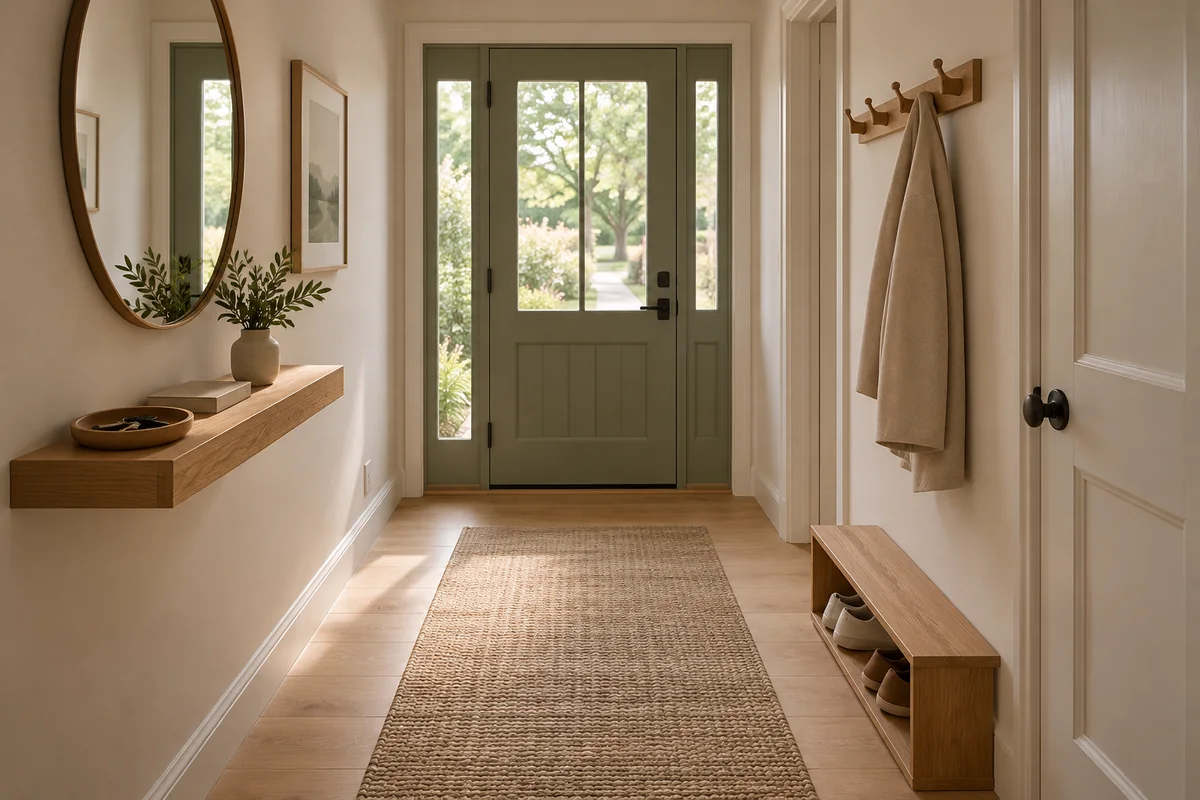
Keep storage especially selective. A landing spot and a small daily shoe allocation may be sufficient, with coats and occasional footwear stored farther inside. Use wall space only where mounted items do not interfere with the passage. An uninterrupted stretch of wall can remain empty.
If a mirror is helpful, position it to reflect light or provide a useful last check before leaving. A mirror that faces a busy coat rack may simply double the visual activity. Mount it according to its weight and the wall conditions; its decorative benefit does not reduce the installation requirement.
An entrance that opens directly into the living room
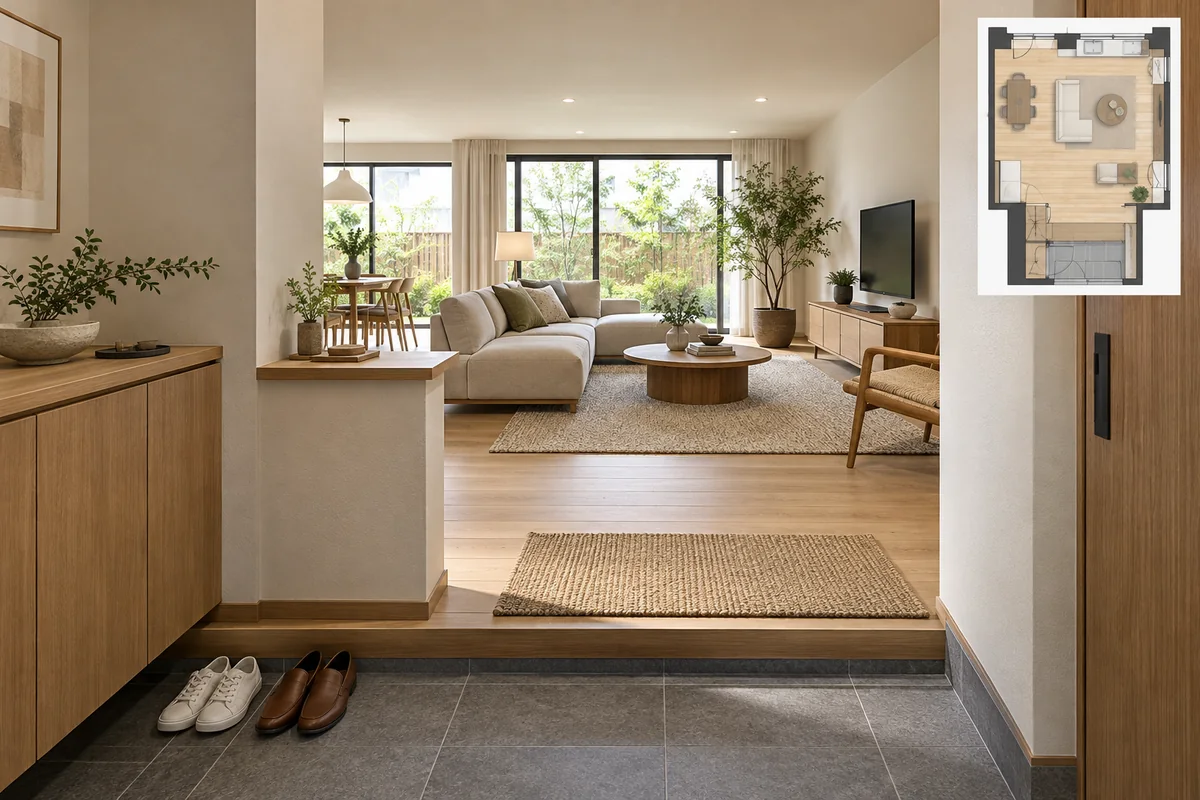
Create a transition through function rather than a bulky divider. A reachable key location, controlled shoe area, and repeated material can identify the entrance without closing the room. The landing furniture may be shared with the living area if its two jobs remain compatible.
If the entrance still feels crowded, our guide to making a room feel bigger explains why clear sightlines help perception. Keep the actual entrance route the first priority; visual tricks cannot correct a door that hits furniture.
A small recess beside the door
Measure the recess from floor to the height of the proposed storage. Trim, a switch, or an uneven wall can reduce the usable footprint. A bench can be useful if people can sit and stand without obstructing the door, but a recess is not automatically large enough for one.
Consider open storage only for items that benefit from quick access and can stay within the defined area. Closed storage may be better for miscellaneous small belongings. Avoid turning the recess into a deep stack that requires moving several things to reach the object at the back.
Control the objects waiting to leave
Returns, borrowed books, and outgoing parcels can consume an entrance even when daily items are organized. Give them one defined temporary location and a regular removal routine. A small container can help establish the boundary, but it should not become a second permanent collection.
Paper needs a similar decision. Keep only what must be acted on near the entrance, with personal or sensitive documents stored appropriately. Recycling and filing destinations should be elsewhere if the narrow passage cannot accommodate them. The entrance is a handoff point, not necessarily the household's complete administration area.
Our small home organization guide develops this idea room by room. A more useful place for belongings elsewhere can relieve pressure at the front door without buying another storage product for an already constrained space.
Choose finishes for the actual arrival routine
Think about wet footwear, outdoor dust, bags, and repeated contact. Check care and slip-related guidance for the specific mat or floor product you use. A decorative loose rug that catches the door or moves underfoot is not an improvement, regardless of how well its color suits the hallway.
Keep daily surfaces easy to wipe and sufficiently clear to use. A fragile arrangement of objects near a swinging bag can require constant attention. One personal detail can make the entrance welcoming without turning its only useful surface into a display shelf.
The weekly reset test
Plan for a parcel without making it a permanent feature. A delivery may need a temporary resting place, but it should not occupy the door swing or the only clear passage. Decide where packaging is opened and where the contents move afterward. If deliveries regularly overwhelm the entrance, the missing solution may be a better handoff deeper inside the home rather than more furniture beside the door. Keep the landing area limited enough that it can return to ordinary use quickly.
After a week, identify what still has no place, what storage is inconvenient to use, and where the route narrows in practice. Change one of those relationships rather than replacing the entire system. Often a moved hook, reduced shoe allocation, or clearer onward destination resolves the remaining problem.
Keep the setup that lets people arrive, put essentials down, and continue into the home comfortably. A narrow entryway does not need to imitate a larger foyer. It needs a few well-chosen functions, a manageable capacity, and enough room for the ordinary movement of coming home.
Images are AI-generated design illustrations, not photographs of documented projects. Conceptual layout illustrations are not measured plans.
About editorial attribution ↗