A home often feels more comfortable after a small rearrangement than after a large delivery. A lamp moved beside the chair you use, a blanket brought out of a cupboard, or a cleared table can change an evening without changing the room's furniture. Cozy home ideas on a budget work best when they start with those existing resources.
Cozy is a personal experience, not a prescribed collection of candles, beige cushions, and decorative baskets. Some people want softer light and texture; others need a useful reading spot or less visual clutter. Name the missing quality before spending. The following ideas offer different ways to improve it without assuming every room needs all of them.
Make the seat you use most more comfortable
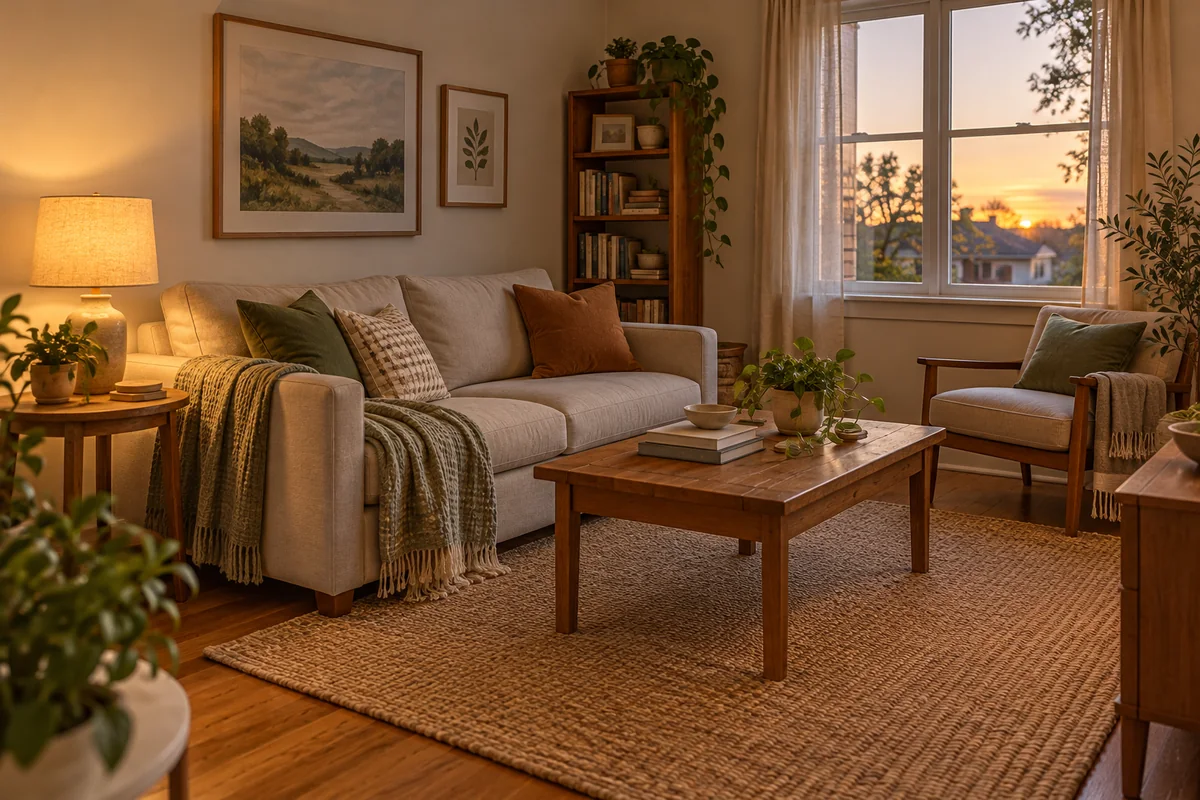
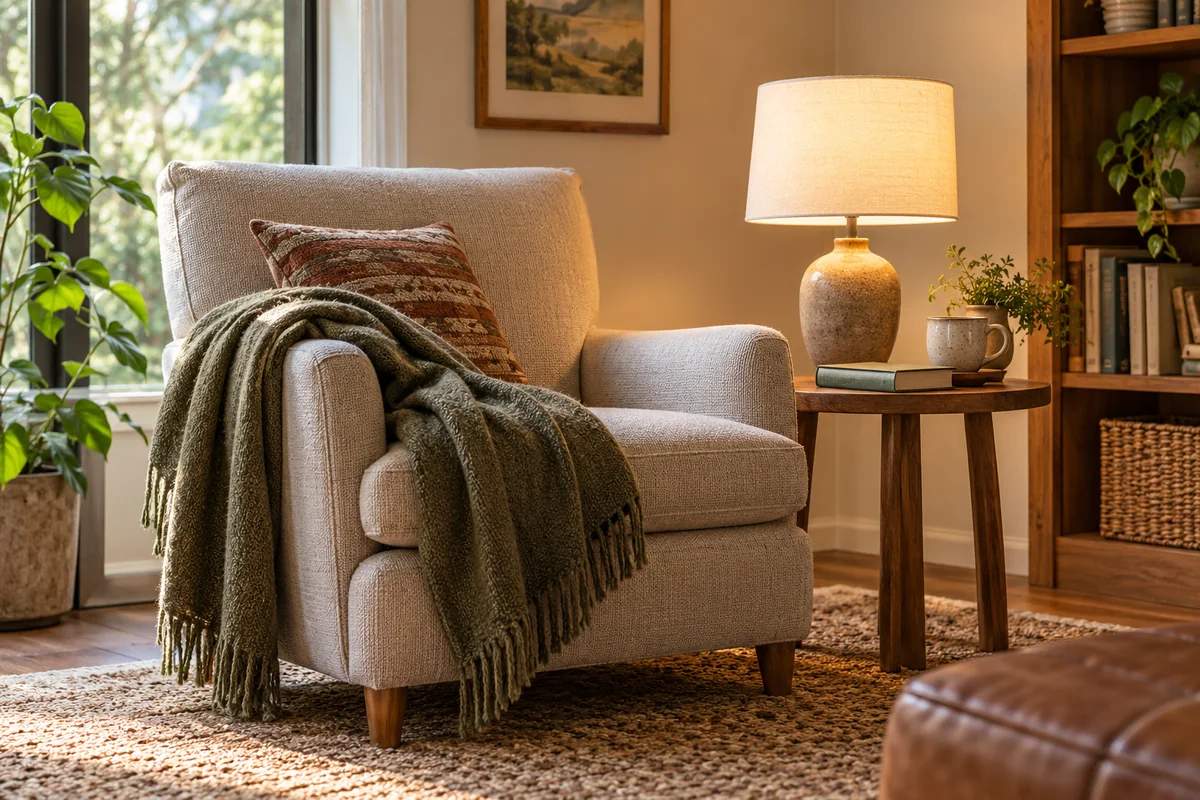
Start where you actually spend time. Check the cushion support, back position, reachable surface, and light. A replacement insert suited to an existing cover or a small table moved from another room may make the seat more useful than a new decorative accessory placed across the room.
Bring a blanket within reach rather than arranging several throws for appearance. Choose something comfortable and manageable to wash. If the chair itself does not suit you, do not keep purchasing cushions in the hope that styling will solve a fundamental comfort problem. Consider a different existing seat or save toward a better-fitting piece.
This is especially useful in a room with several activities. Improving one corner gives the home a clear place to pause without requiring a complete redesign. Keep the surrounding route usable so the inviting seat does not become an obstacle.
Improve the evening light before adding decoration
Look at the room after dark. A single overhead source can leave a comfortable chair poorly lit or create glare from the usual seat. Moving an existing suitable lamp may reveal whether position is the main problem. Check product instructions, bulb compatibility, and safe cord placement before changing the setup.
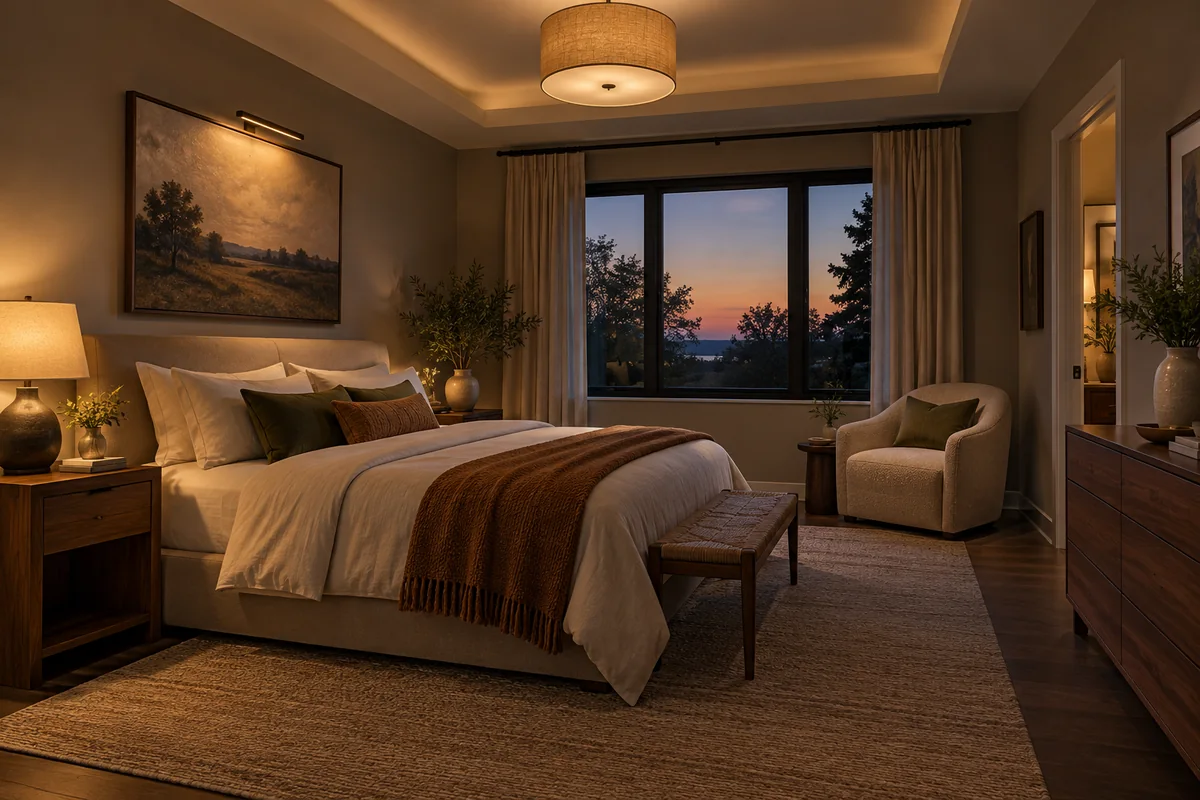
If a purchase is necessary, tie it to an activity: reading, conversation, or finding objects on a surface. A useful shaded lamp may provide more value than several decorative lights. Our bedroom lighting ideas explain task and ambient layers that can also inform other rooms.
Avoid improvised shades, fabric placed over bulbs, or other attempts to soften light in ways not supported by the product. The goal is a comfortable arrangement, not a low-cost workaround that creates a new problem. Keep changes simple and compatible with the fixtures you have.
Shop the home for one tactile layer
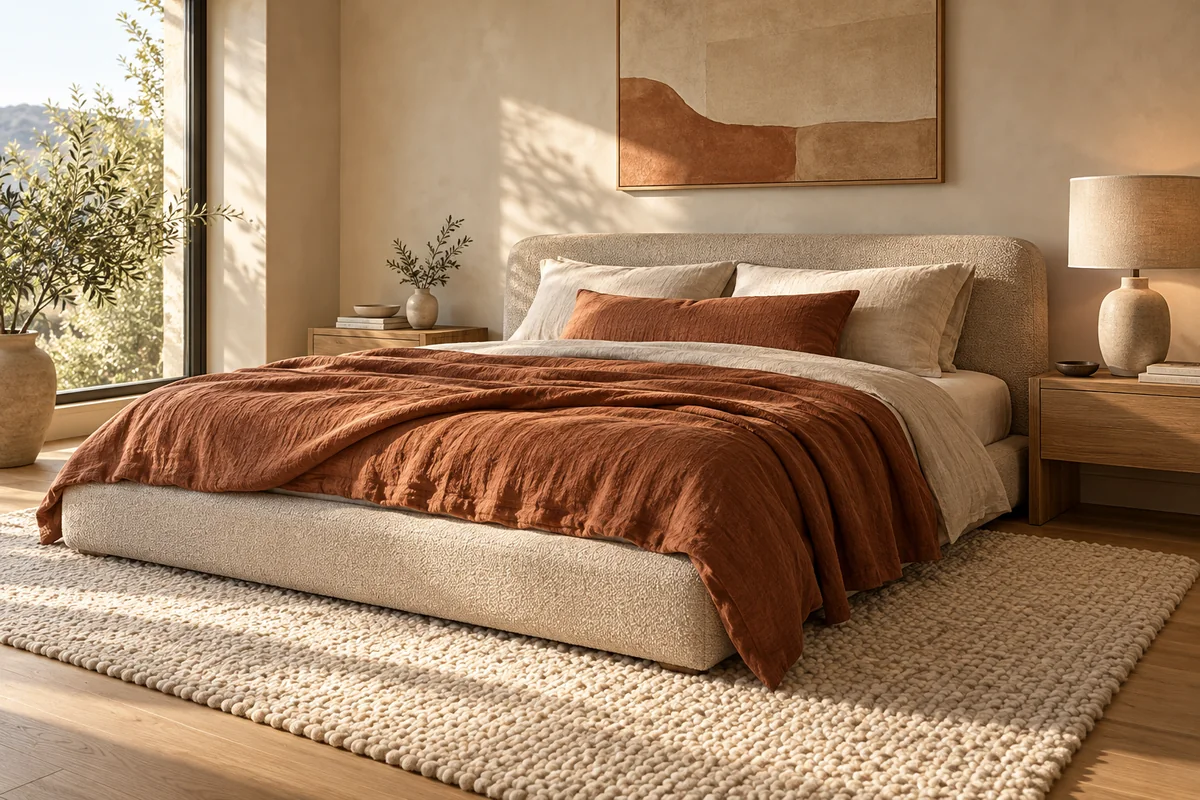
Look through stored textiles before buying new ones. A plain blanket, unused cushion cover, or small appropriate rug might already provide the surface variation the room lacks. Assess its condition and suitability for the intended use rather than choosing only by color.
Try one item, live with it, and decide what changed. If the room already contains several strong textures, a quieter textile may work better than another highly tactile piece. Comfort does not require every surface to be soft, nor does a room need to be layered until every sofa seat is occupied by a cushion.
Our warm minimalist decor guide develops this approach for people who want warmth without more clutter. Keep the reduced arrangement and improve the quality of what is touched, seen, and used.
Rearrange a small group instead of replacing it
Pull a chair into a useful relationship with a sofa, move a lamp beside the activity, or reposition a side table where it can be reached. Test the arrangement before deciding the room needs a new focal item. Existing furniture can feel very different when the relationships improve.
Do not assume pushing everything against the wall creates the most usable space. It may leave a large empty center and disconnected seats. Equally, floating furniture is not automatically better if it narrows the route. Compare the practical movement and comfort of both arrangements.
If moving furniture reveals that a piece has no useful role, relocate it rather than styling around it. Removing a redundant object can make the room easier to reset and allow the remaining material and color choices to be seen more clearly.
Use color through a small, coherent change
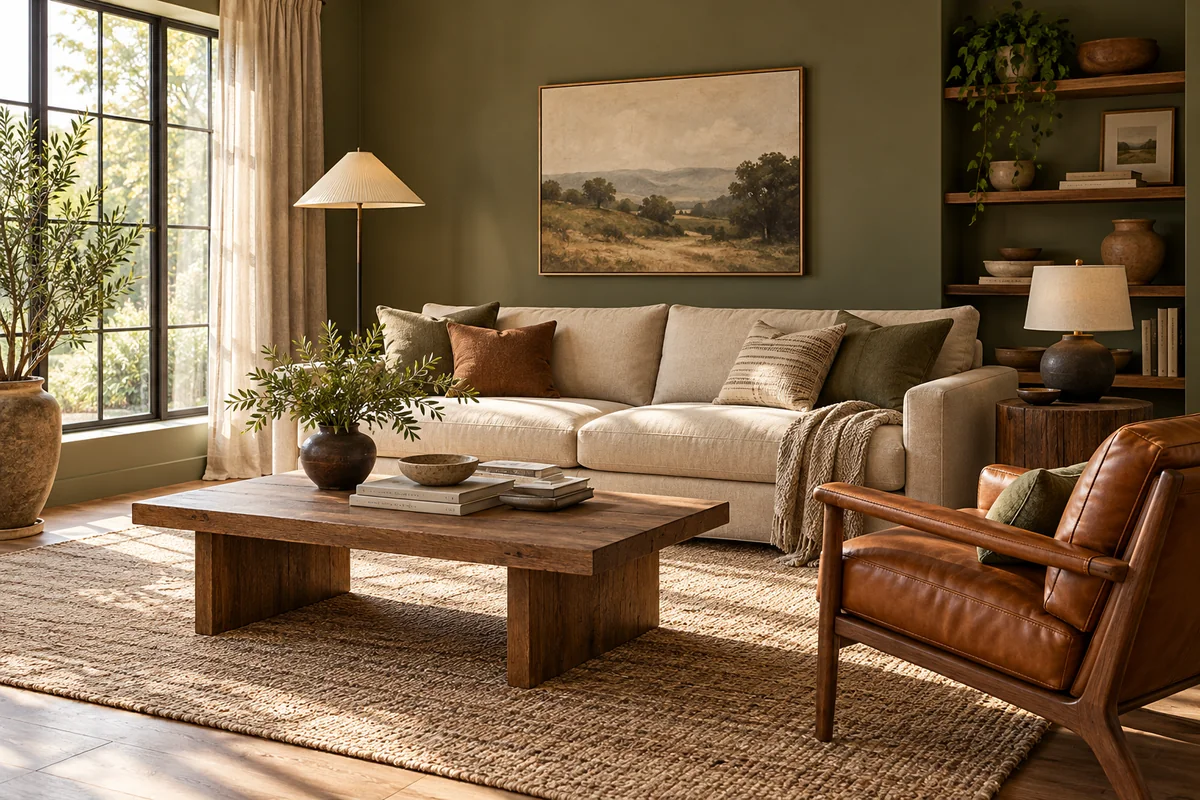
A cushion cover, modest artwork, or reusable textile can test a warmer or richer palette before paint. Start with the existing upholstery and floor. Choose an accent that relates to them rather than adding a fashionable color that needs several other purchases to make sense.
For neutral upholstery, our guide to colors that go with a beige sofa offers distinct directions. Try one combination and compare physical samples in the room. A low-cost item is still poor value if its color is wrong and it remains unused.
Keep some space around the new accent. A deliberate color in one useful position can have more effect than many small objects scattered throughout the room. The simpler arrangement is also easier to change when your preferences shift.
Make existing art feel intentional
Gather pictures you already own and test their arrangement on a floor or paper plan before mounting. A small related group can create a clear focus without requiring expensive new art. Keep personal images that matter rather than replacing them solely to achieve a coordinated palette.
Check the scale in relation to the furniture below. Several tiny frames can appear scattered over a broad sofa, while one grouped arrangement may feel more coherent. You can test the outline with paper templates suitable for the wall surface before making additional holes.
Follow appropriate hanging guidance for the object and wall. Renting, heavy frames, and unsuitable surfaces may require a different approach. A shelf or existing location can sometimes serve the purpose, provided objects are stable and appropriately secured.
Consider secondhand only after measuring the need
A used table or chair can be a useful purchase if it fills a specific gap. Record required dimensions, inspect condition, and account for transport, cleaning, repair, and any necessary safety checks. A low asking price does not describe the complete cost or suitability.
Be especially thoughtful about upholstered items, electrical products, and furniture with missing parts or unclear history. Use appropriate inspection and product information rather than assuming every bargain is ready to use. If you cannot assess an item confidently, choose another route.
Avoid buying a piece first and inventing its purpose afterward. A slightly wrong table can lead to further purchases or remain in a passage because there is nowhere useful for it to go. The most affordable furniture is often the furniture you do not need to replace twice.
Improve the room's reset rather than hiding everything
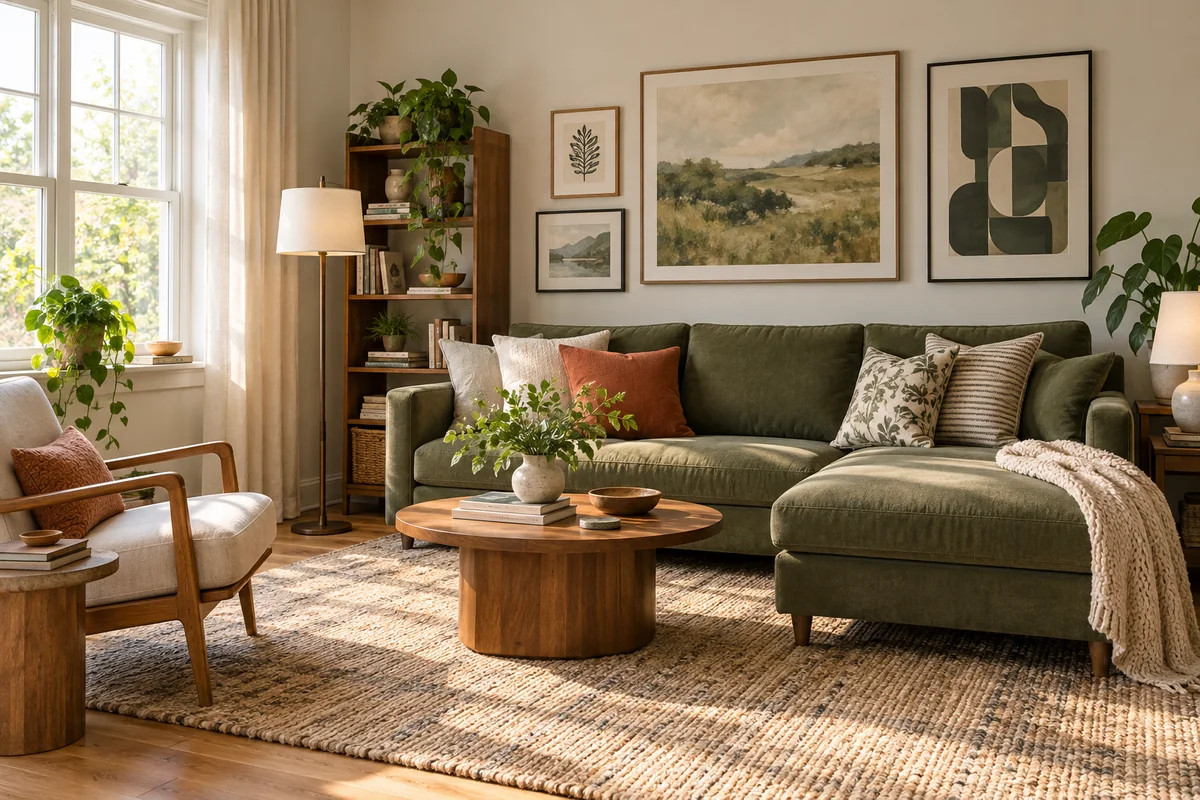
A clear useful surface can make a room feel more welcoming because it is ready for the next activity. Give remotes, current books, and small work items a simple destination. Use an existing drawer or container before buying a full set of storage products.
Keep the reset realistic. If putting away a blanket requires opening a complicated storage arrangement, it may stay on the floor. A nearby appropriate basket can work, but only if it has room and does not interrupt movement. The right solution depends on the object and route, not the decorating category.
Do not confuse cozy with crowded. A room can hold personal objects while still leaving a place to set down a cup or open a book. Remove temporary clutter from the most useful surface, then see whether the room needs additional decoration at all.
Work with an illustrative budget, not a shopping quota
Suppose you choose to allocate an example budget of $100. You might reserve $40 for a task-lighting improvement, $25 for a textile, $15 for practical storage, and $20 for unforeseen needs. These are planning allocations, not current price claims or promises that specific products are available at those amounts.
Your actual priorities may be entirely different. If the lighting already works, keep that money or redirect it to the uncomfortable seat. Include delivery, tax, cleaning, and any fitting cost before deciding a purchase fits the budget. It is acceptable for the best plan to spend less than the amount available.
Wait between changes when possible. A few evenings of use can reveal that the first adjustment solved the problem, or that a different improvement deserves the remaining money. That pause is especially useful when inexpensive items are tempting because each seems too small to matter financially.
Pick the change you will notice every day
Check existing window treatments before replacing them. Cleaning according to the care instructions, correcting an awkward arrangement, or moving furniture away from a curtain's useful opening can change the view. A new treatment should answer a real privacy, light, comfort, or maintenance need, not merely imitate the length or color in a photograph. Reusing what works leaves more of the budget for the element that is actually missing.
Choose one improvement linked to a recurring moment: reading after dinner, getting into bed, or sitting with a friend. Make the change and assess its effect before starting another. A cozy home grows from these useful relationships more reliably than from buying a complete look.
Keep what improves comfort, access, or the way you enjoy existing belongings. Return or pass on unsuitable additions responsibly rather than leaving them as another layer to manage. A limited budget can produce a more considered room when every purchase has a clear job and existing resources receive the first look.
Images are AI-generated design illustrations, not photographs of documented projects. Conceptual layout illustrations are not measured plans.
About editorial attribution ↗