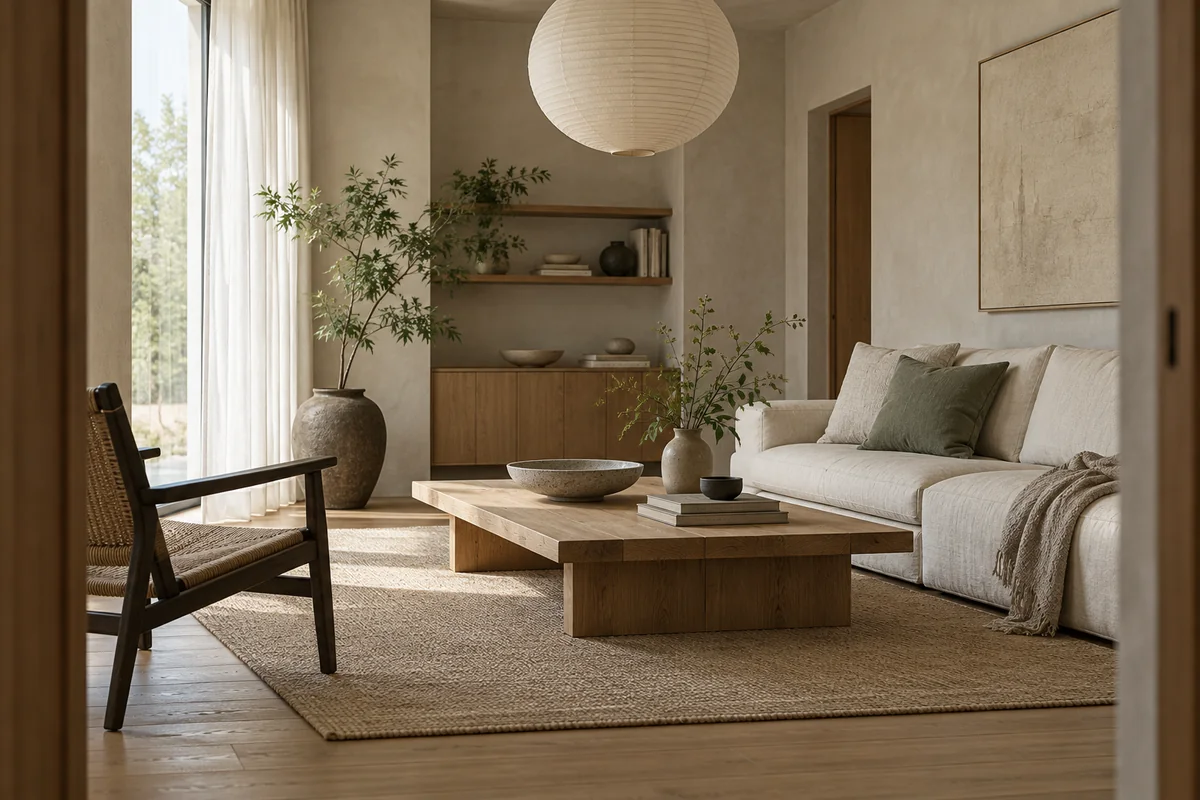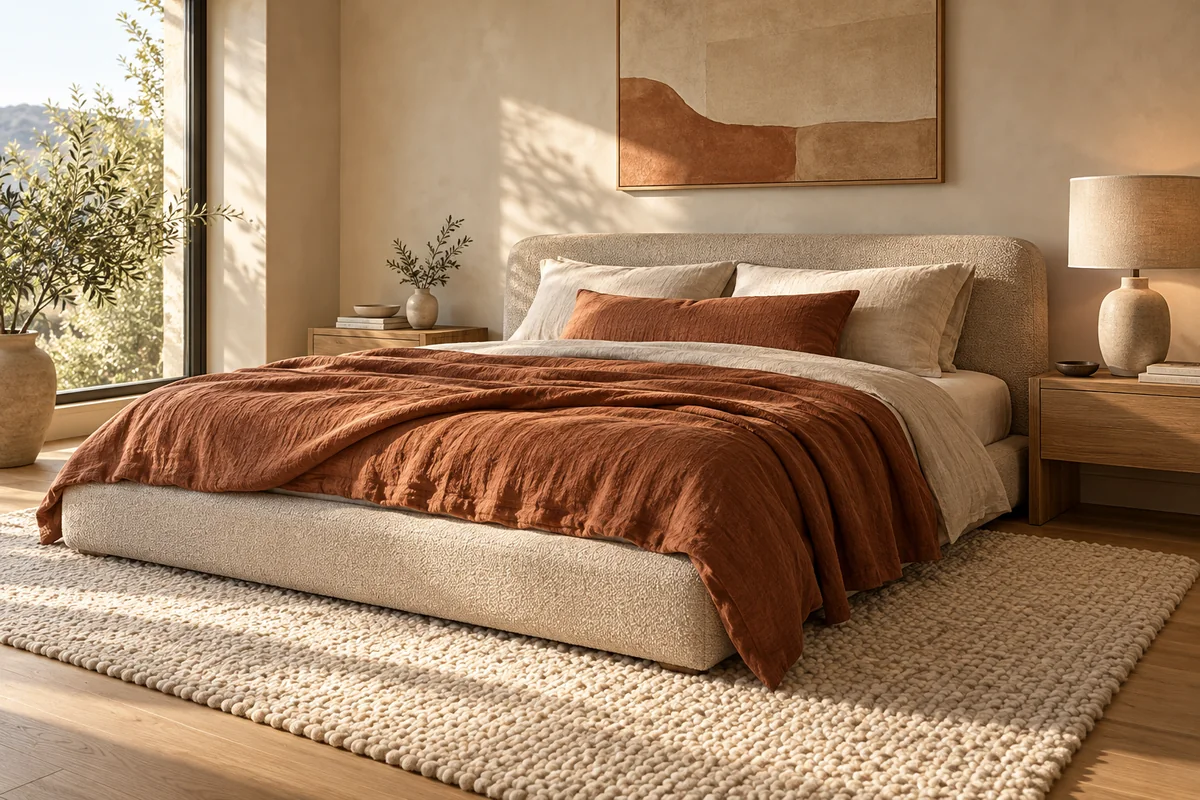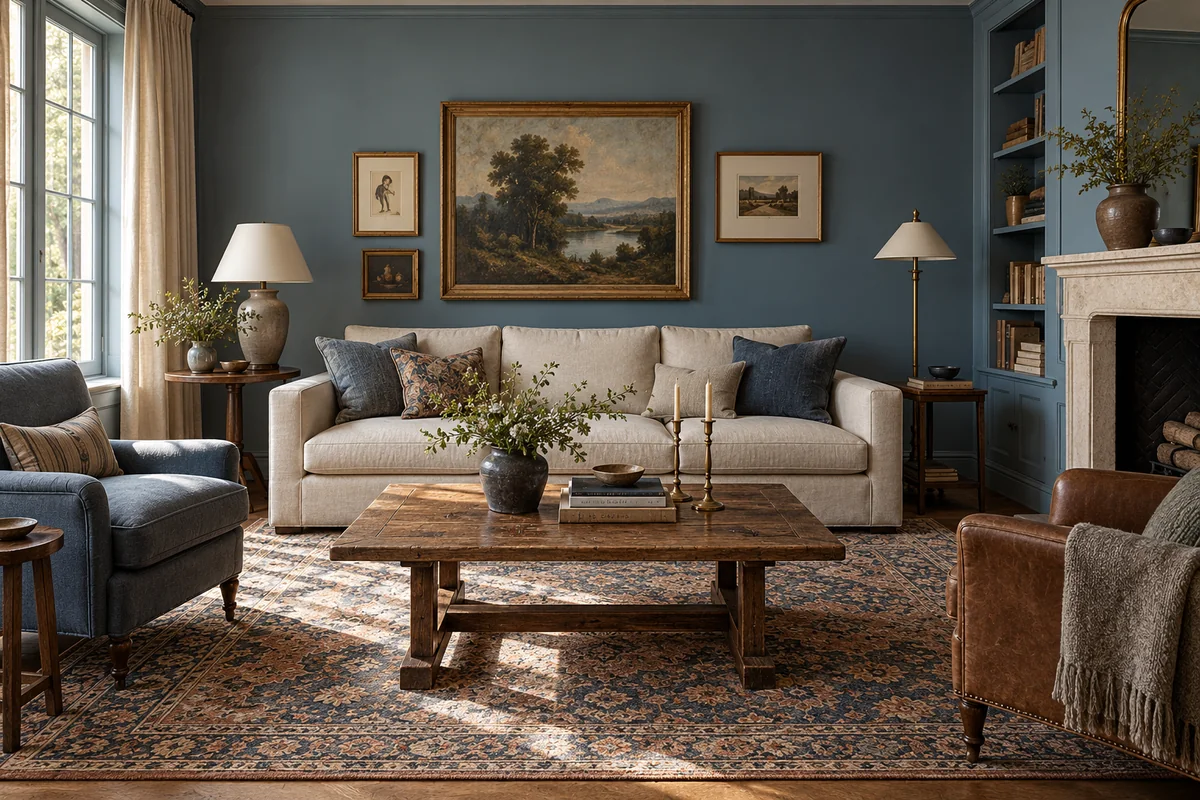
A pale room with a wooden chair might be described as Scandinavian, minimalist, or both. That overlap explains why the two labels are often used interchangeably, but it does not make them identical. Scandinavian vs minimalist design is a useful comparison when you are choosing how much texture, visible storage, color, and decorative detail you want to live with.
For a decorating decision, think of minimalism primarily as a method of reducing and clarifying, while Scandinavian design suggests a broader set of regional design references often associated with practical furniture and comfortable daily use. Neither has a single compulsory palette. You can prefer the warmth of one and the visual discipline of the other without turning your home into a strict style exercise.
What the two approaches are trying to do
Minimalist interior design places importance on selection, space, and relationships. Removing an unnecessary object can reveal a better proportion or a clearer route. The purpose is not necessarily to own the fewest things, but to keep the things that contribute to the room's function and composition. A colorful room can still be carefully reduced.
Scandinavian interior design is not one uniform national style. As a practical contemporary reference, it often brings together useful furniture, visible timber, tactile textiles, and attention to the experience of ordinary domestic activities. A room might be restrained and light, yet still contain books, patterned fabric, a comfortable lamp, and objects accumulated over time.
The difference becomes clearer when something must be added. In a minimal room, you may first ask whether an existing piece can perform the job. In a Scandinavian-inspired room, you might be more comfortable introducing another useful object if its scale and material fit. Both decisions can be thoughtful; they simply begin with different priorities.
Scandinavian vs minimalist design at a glance
The table describes common decorating tendencies, not fixed definitions or a ranking of good and bad taste. Use it to recognize what appeals to you, then test the corresponding choices in the room you actually have.
| Decision | Scandinavian-inspired approach | Minimalist approach |
|---|---|---|
| Main emphasis | Practical comfort with material character | Reduction, clarity, and deliberate selection |
| Furniture | Useful forms, often with visible wood and approachable proportions | Fewer pieces, with close attention to outline and function |
| Color | Light or muted backgrounds, with room for pattern and color | Any controlled palette, often with fewer competing transitions |
| Texture | Woven fabrics, timber grain, and layered everyday softness | Selected textures that reinforce a clear composition |
| Storage | Open and closed storage may coexist visibly | Concealment or tightly edited display often receives emphasis |
| Personal objects | Collections can remain part of domestic character | Objects are selected carefully and given more space |
The strongest overlap is intentionality. Neither approach requires filling a room with accessories, and neither is improved by furniture that does not fit. The most useful distinction is often not what you buy, but how readily you add another layer and how much of daily life remains visible.
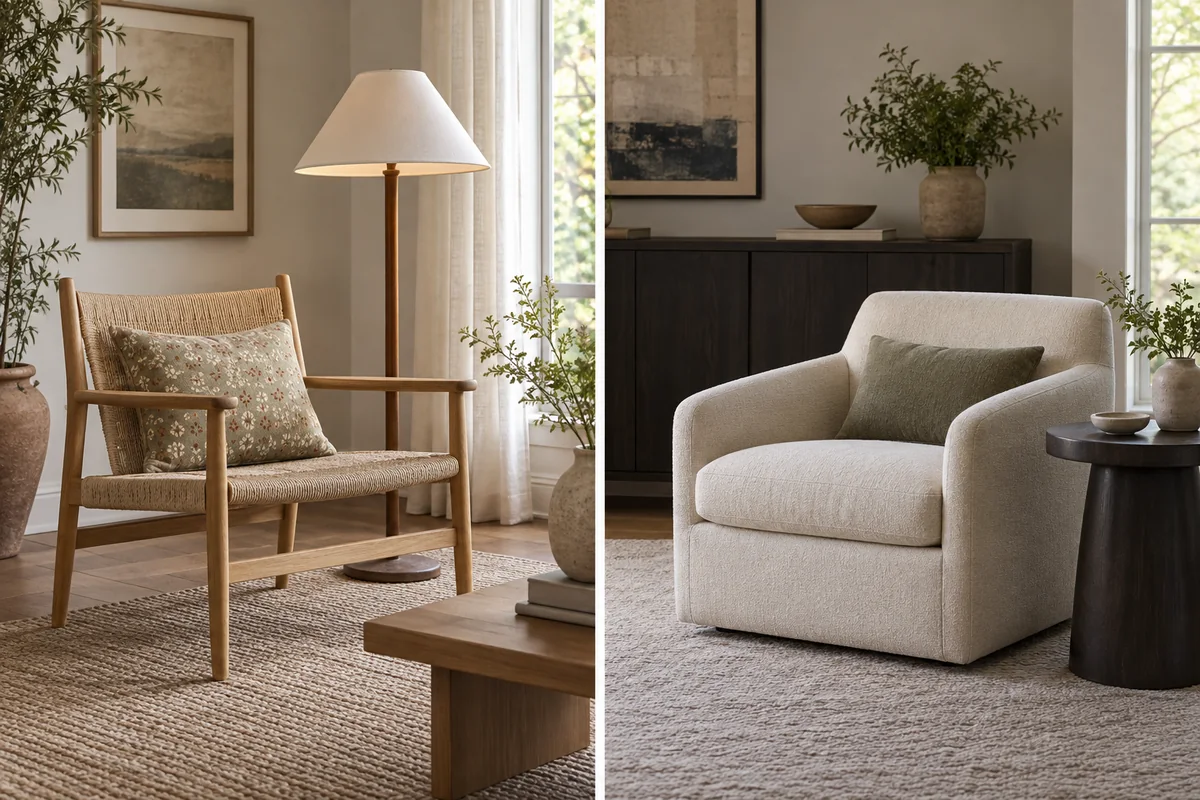
Furniture: welcoming detail or a quieter outline?
For a Scandinavian-inspired sitting area, consider the parts of a chair you can see and touch: shaped timber arms, a woven seat, a fabric cushion, and a comfortable back. A small amount of construction detail may be part of its appeal. Pairing it with a straightforward sofa can keep the group from feeling like a display of individual objects.
For a more minimal room, assess the whole silhouette first. A piece might have concealed storage, a continuous surface, or fewer visible junctions. That does not require hard-edged furniture. A curved upholstered chair can belong if it provides a clear seat and does not introduce several competing material stories.
Comfort remains a separate test. Sit in the actual chair when possible, check the dimensions, and consider how you will stand up or move it. A low profile is not universally preferable. Choosing an uncomfortable piece because it matches a photograph misunderstands both approaches, which should still support the people using the room.
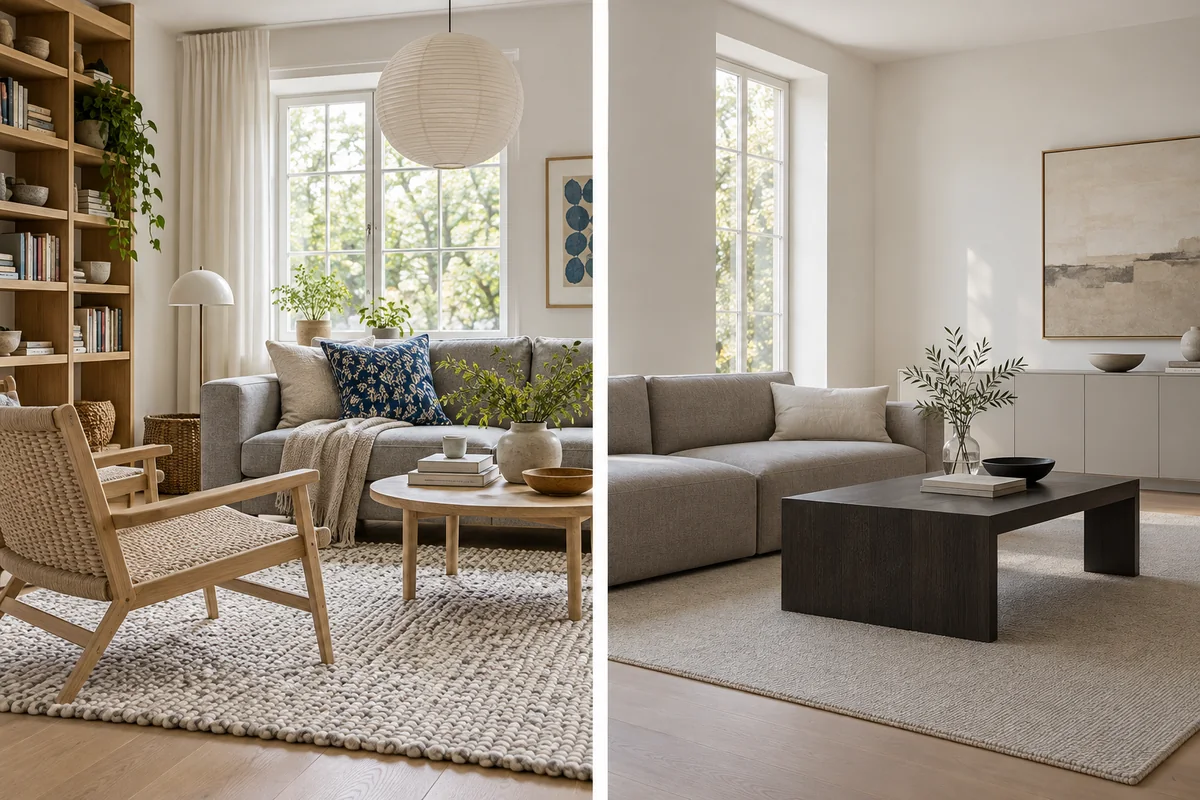
One sofa, two different surrounding choices
Imagine keeping the same plain gray sofa in two hypothetical arrangements. In the first, a timber side table, patterned cushion, wool throw, and reading lamp make the sofa part of a layered domestic setting. The palette remains controlled, but the objects show several kinds of everyday use.
In the second arrangement, retain the lamp and one useful table, move miscellaneous storage into a cabinet, and leave the sofa's surface mostly clear. Add a single artwork rather than several small frames. This feels more reduced even though the largest piece of furniture has not changed. The distinction comes from editing, not from the sofa's label.
Color and materials: avoid the white-room assumption
White is optional in both approaches. A muted blue wall with timber furniture can feel Scandinavian-inspired; a dark room with a few carefully placed objects can feel minimal. What changes is the number and character of relationships, not whether the paint is light enough to fit a familiar image.
To choose a palette, start with fixed materials and test proposed colors beside them. If your floor has a warm orange undertone, a cool gray fabric may make that difference more noticeable. You can either bridge the relationship with a textile containing both tones or make the contrast intentional by repeating each elsewhere.
For a Scandinavian home decor direction, pattern may come through a useful textile or artwork rather than a whole-room theme. For a minimal approach, vary the scale of color areas and leave enough uninterrupted surface to make them clear. One large colored plane can create less visual noise than many scattered neutral accessories.
Storage exposes a more useful difference
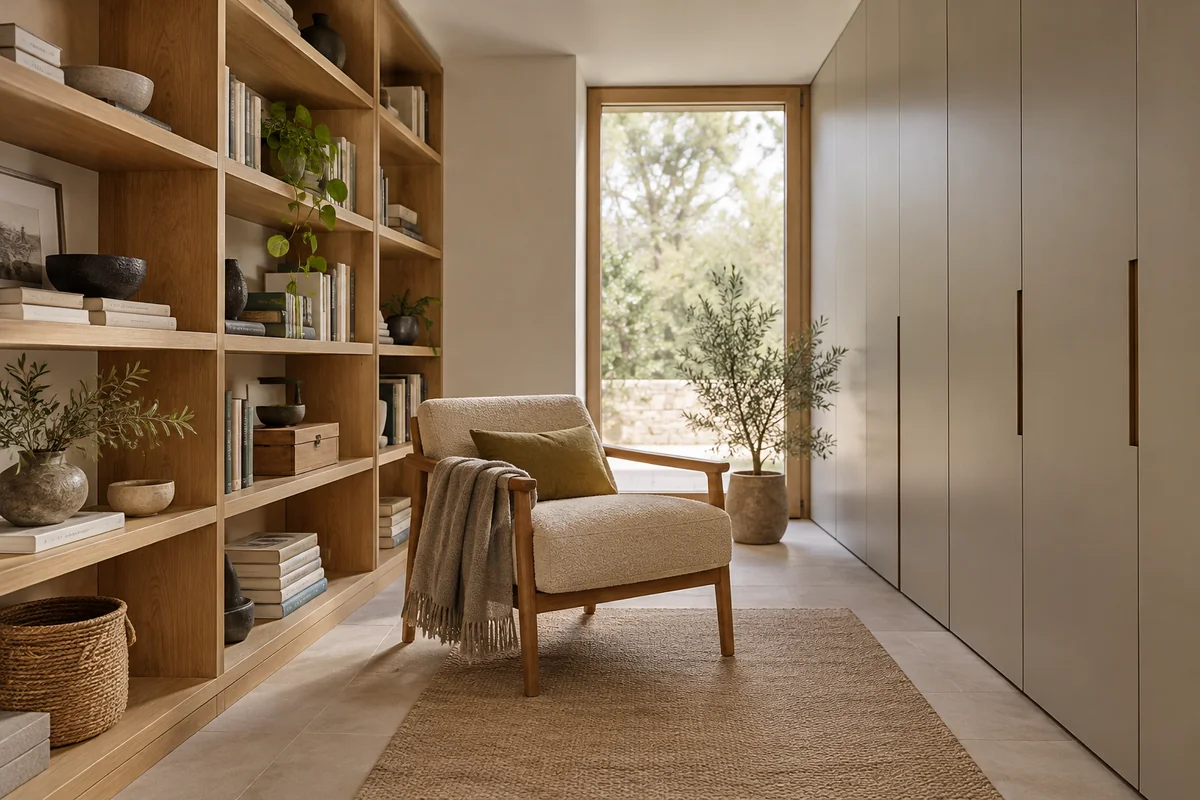
The decision between open and closed storage often matters more than the decision between oak and white paint. Open shelves let books and objects contribute to the room. They also require you to accept visible variation. Closed storage quiets that variation but must still be easy enough to use that things return to it.
Do not confuse hidden clutter with a functioning system. A minimal-looking cabinet that takes several steps to open may not suit daily toys or work supplies. Similarly, an appealing open shelf is not helpful if every frequently used item sits behind decorative objects. Choose the arrangement according to retrieval and reset, then refine its appearance.
If you enjoy visible books and changing collections, a Scandinavian-inspired room may give you a more comfortable starting point. If visual activity makes it difficult to relax, begin with a more reduced arrangement. You can keep a display in one defined area while letting the rest of the room remain quiet.
Which approach suits your existing home?
A home with several timber finishes, inherited furniture, and a busy household does not need to be emptied before it becomes coherent. Start by connecting a few materials and improving storage. A layered, Scandinavian-inspired direction can accommodate those existing differences without making every object a matching purchase.
A space with strong architecture or a very limited footprint may benefit from more deliberate reduction. If a beautiful window, wall, or long view is already the main feature, fewer competing objects can help it remain visible. This is a compositional choice, not evidence that small homes must be minimalist.
Consider how much time you want to spend maintaining a display. A room with many open surfaces may require regular repositioning and dusting; a stripped-back room can become frustrating if useful possessions have no convenient home. Choose the kind of order you can realistically keep, rather than the one that looks most impressive while unused.
If you like restraint but dislike cold rooms
Reduce the number of pieces while keeping comfort visible. A textured rug, an upholstered seat, and a well-positioned reading light can remain. Our warm minimalist interior design guide focuses on adding softness through surfaces and lighting rather than an expanding collection of decorations.
If you want a more material-led middle ground
Choose a few clear forms and allow timber, fabric, and ceramics to carry the detail. Our Japandi design guide explores that combination without treating regional influences as a rigid shopping checklist. Keep cultural references specific and respectful rather than reducing them to a set of fashionable props.
Make the choice with a small experiment
Select a corner rather than a whole room. Remove objects that do not support its main activity, then arrange the essential furniture. Photograph it for your own comparison. Add back one useful textile, one lamp, and one personal object, assessing which changes improve comfort or make the composition clearer.
Live with that arrangement through ordinary routines. If the bare version feels inconvenient, you may have removed useful functions rather than excess. If the layered version quickly feels crowded, edit the number of visible items while retaining the comfortable materials. Both outcomes give you more information than choosing a style name first.
For larger purchases, judge dimensions, maintenance, and long-term usefulness before visual identity. The principles in our timeless decorating guide can help you separate adaptable choices from a complete coordinated look. Choose the approach that makes your existing home easier to understand and enjoy; allow its label to remain flexible.
Images are AI-generated design illustrations, not photographs of documented projects. Conceptual layout illustrations are not measured plans.
About editorial attribution ↗