An inherited dining table and a clean-lined new sofa do not have to belong to separate decorating schemes. Transitional interior design offers a way to connect classic and contemporary pieces through proportion, material, and a controlled amount of detail. Its purpose is not to make every object halfway traditional and halfway modern. It is to let different objects make sense together in the same room.
Begin with the pieces and architectural features you intend to keep. A paneled door, substantial baseboard, timber chest, or simple sectional can become the starting point. The challenge is to establish a hierarchy, so the room does not feel like two complete styles competing for attention. Some elements will lead; others will provide the quieter background.
What makes a room transitional?
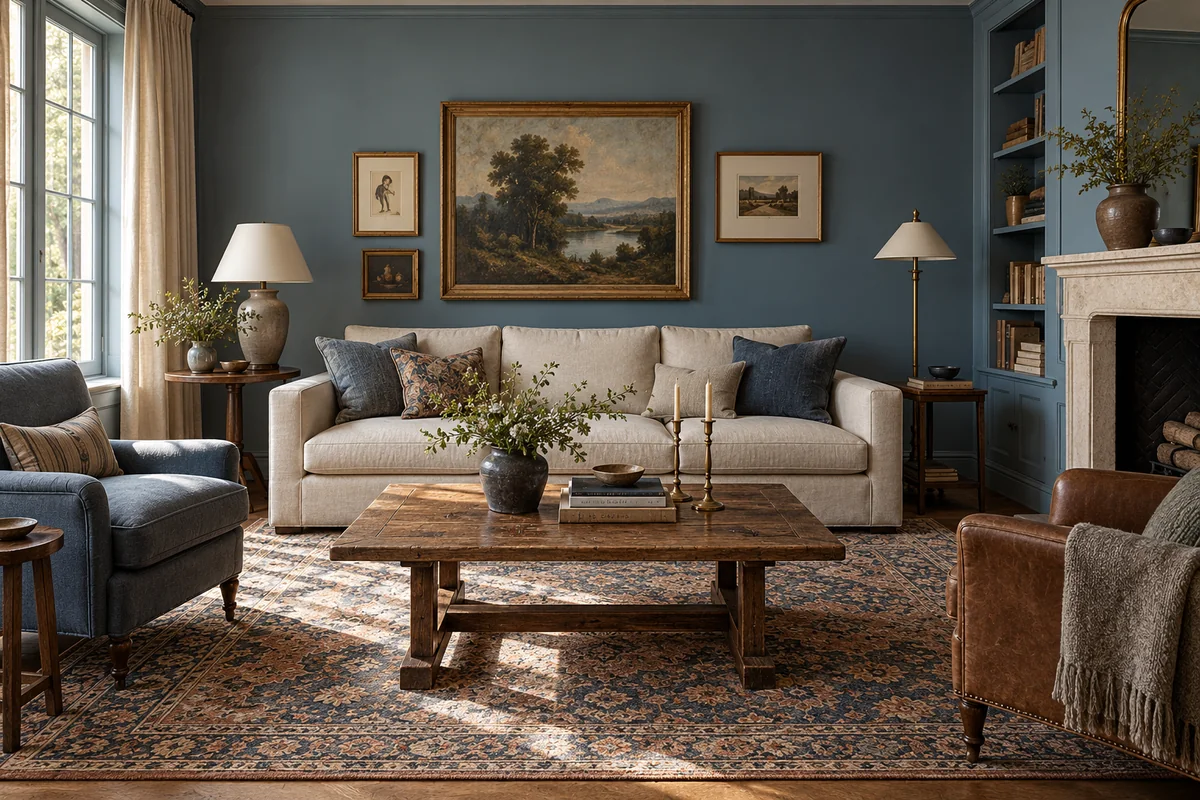
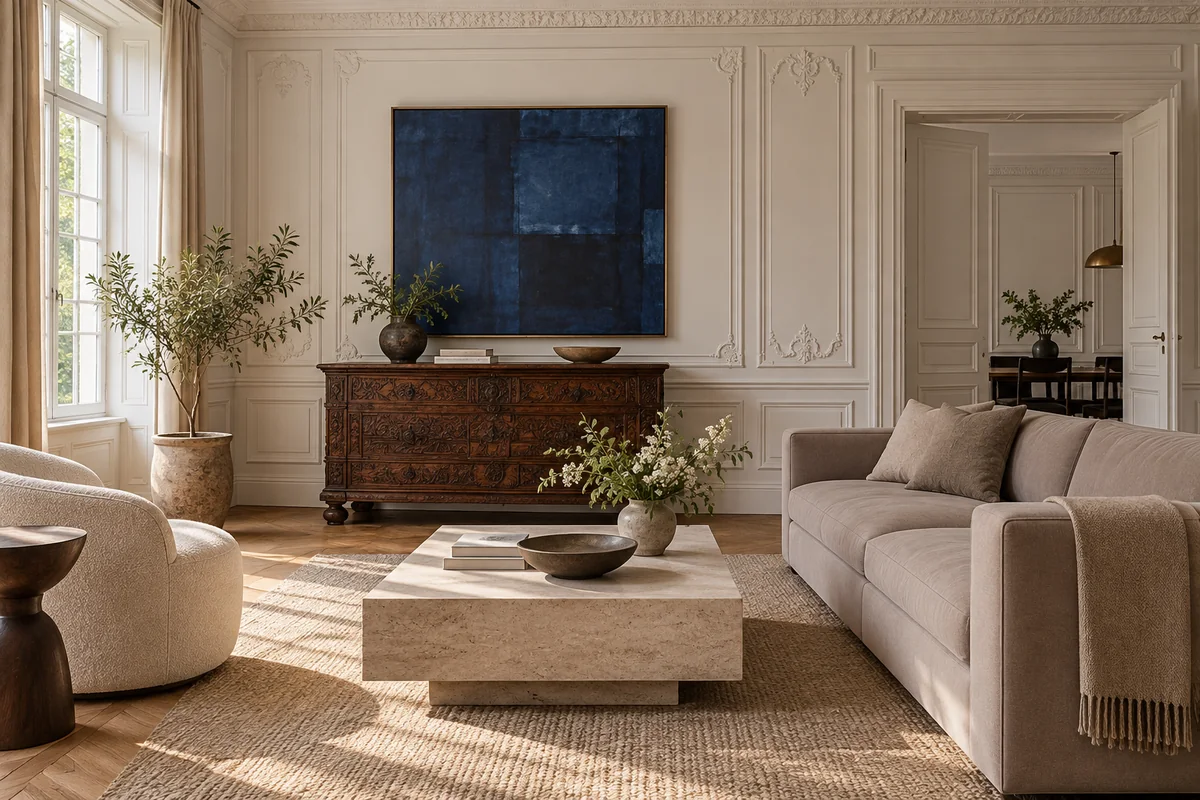
In contemporary decorating language, transitional usually describes a blend of traditional reference points and more streamlined forms. You might see a classic table with restrained chairs, a modern sofa beneath decorative molding, or a patterned rug supporting a relatively simple seating group. The relationship is more important than the age of any individual piece.
Traditional and modern are broad terms, not precise specifications. A carved cabinet and a plain antique worktable bring very different amounts of visual detail. Likewise, a contemporary chair may be quiet and rectilinear or highly sculptural. Assess the actual outline, scale, and finish rather than assuming pieces will coordinate because their labels suggest balance.
A useful transitional decorating style makes the contrast readable. If you simplify or disguise every older item, the room may lose what made it interesting. If every contemporary addition is a statement, it may overwhelm the connection. Give a distinctive piece enough surrounding simplicity to remain itself while belonging to the whole.
Choose the anchor before choosing the mix
Select the element that is hardest to change or most important to keep. In one home it might be a fireplace with a strong architectural surround. In another it is a comfortable sofa or a cabinet with family significance. Decide whether that anchor will be a focal point or a background before selecting its companions.
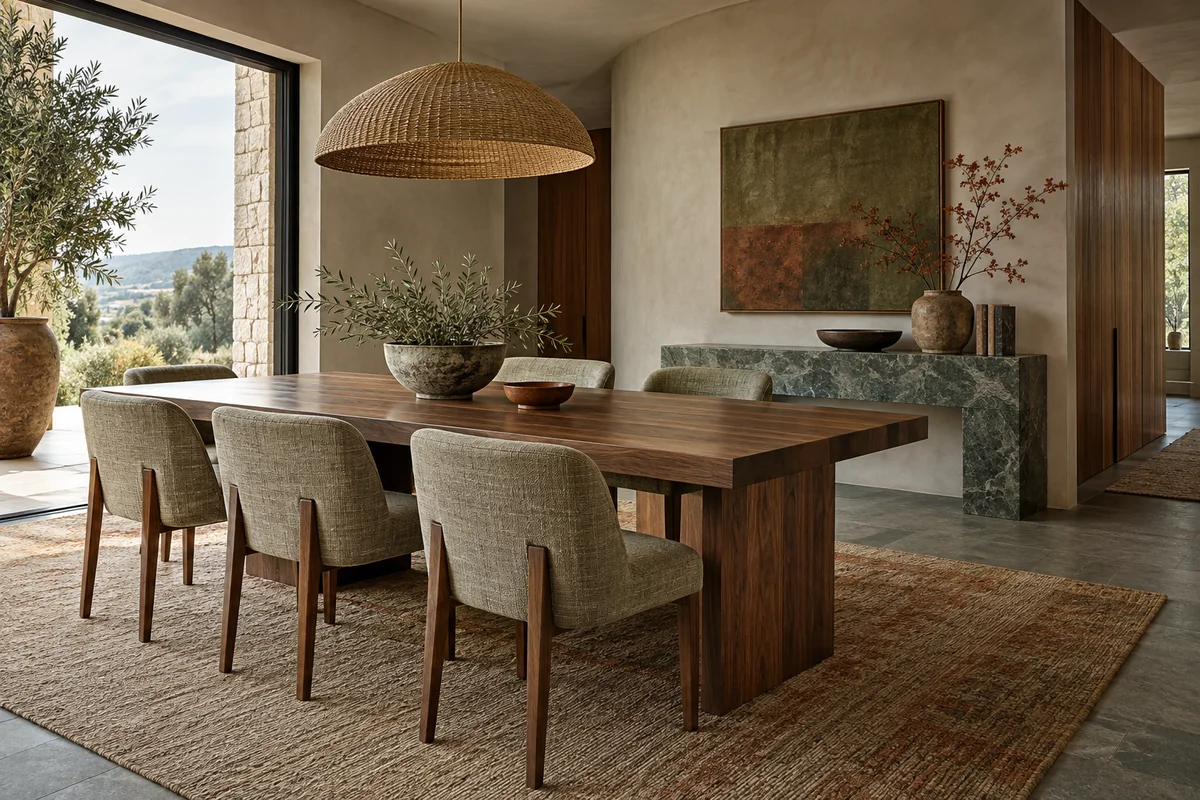
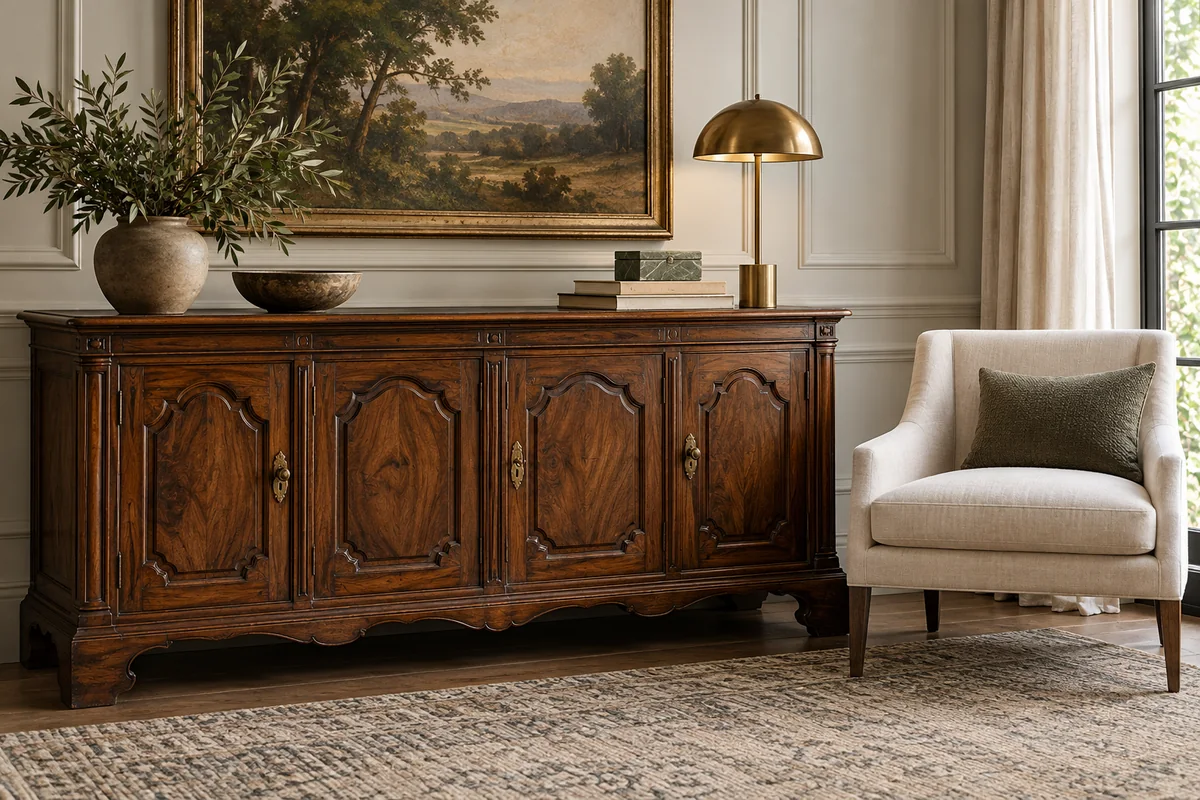
For example, a richly detailed sideboard can remain the focus of a dining area if the chairs, nearby art, and lighting have quieter outlines. A plain oak table can instead support chairs with more character. These examples involve different distributions of detail; neither requires an equal numerical split between classic and modern furniture.
Photograph the room from its main entrance and identify the three things you notice first. If all three are competing for the same role, remove temporary accessories and reassess the arrangement. Sometimes the problem is not incompatible furniture but too many emphatic objects clustered in the same view.
Use scale to make different pieces feel related
Proportion can connect objects that look very different in isolation. A substantial upholstered chair may balance a heavy timber cabinet better than a delicate chair chosen only because its finish matches. Compare width, height, visual weight, and how much open space each piece exposes underneath.
Check relationships at seated height as well as from the doorway. A very tall side table beside a low sofa can feel awkward even when their materials are compatible. Measure the height you can comfortably reach from the actual seat, then test the proposed tabletop with a temporary surface before buying.
In a transitional living room, distribute visual weight rather than putting all the substantial pieces on one side. A large sofa might balance a cabinet and a pair of lighter chairs opposite. That is a compositional example, not a rule about symmetry. The route through the room must remain usable even if a symmetrical arrangement looks attractive on paper.
Give materials something in common
A repeated material can create continuity across different furniture shapes. The brown in a vintage chest might reappear in a picture frame, while a muted metal finish connects a contemporary lamp to older cabinet hardware. Repeat selectively; making every handle, leg, frame, and lamp identical can turn a layered room into a coordinated set.
If the room already contains several wood finishes, assess their undertones and sheen together. You may not need another matching piece. A textile containing related warm and cool shades can bridge a difference more subtly. Keep large materials relatively clear so the eye can understand the main relationships before noticing small details.
For a more material-led approach, our modern organic interior design guide explores the balance between timber, stone, and fabric. Use that analysis here without assuming the room must adopt an entirely new style. A useful material method can work across several decorating directions.
Let pattern have a specific job
Pattern can help an older piece feel connected to newer upholstery, but choose its scale deliberately. A rug with a quiet, varied pattern may introduce several useful colors without becoming the room's loudest feature. A large geometric cushion can bring clarity to a group of softer traditional shapes.
Compare patterns at the distance from which they will actually be seen. A detailed fabric sample that looks busy close up may read almost as texture from across the room. Conversely, a bold repeat can dominate a small chair. Lay out the samples together, then remove one to see whether the remaining group becomes clearer.
Plain fabric deserves equal consideration. If the room already has decorative architecture and an expressive rug, a simple sofa may be the connecting element. There is no obligation to add another pattern merely because a transitional room is supposed to feel layered. A quiet area gives the existing detail somewhere to rest.
Three ways to blend classic and modern home decor
Keep the architecture, simplify the furniture
In a room with molding, a traditional mantel, or paneled doors, streamlined upholstery can make those details easier to appreciate. Choose furniture for comfort and a clear outline. Keep the wall treatment consistent enough that the architecture reads as a connected framework rather than a collection of separate features.
Avoid automatically painting every older surface the same fashionable color. First decide which materials are sound, which have value to you, and what actually needs repair. Reversible changes such as fabric, art placement, and lighting can test the direction before a permanent finish is altered.
Keep the furniture, clarify the setting
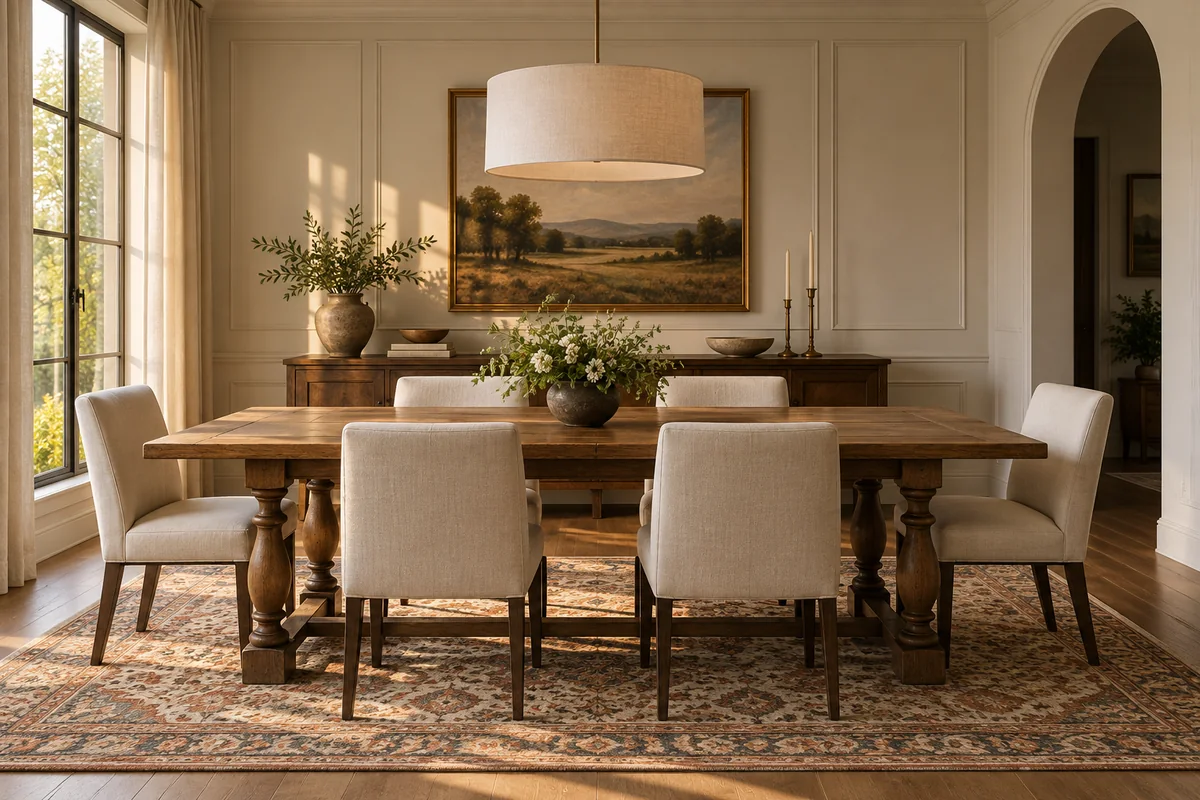
If you have a traditional dining set that works well, simplify what surrounds it. A quieter wall color, fewer small frames, and one well-scaled light can make the furniture feel intentional. You do not need to replace every chair simply to signal a more contemporary approach.
Test the arrangement without the table runner, centerpiece, and surrounding ornaments. Add back only what contributes. The furniture may need less decorative support than expected, especially if its shape and grain already provide interest. This also makes a working dining surface easier to maintain.
Connect one inherited piece to a newer room
An older chest can bring character to a room of simple contemporary furniture. Give it a clear function and enough space for its doors or drawers. Repeat a color or material nearby, then resist surrounding it with many other small antiques simply to explain its presence.
Lighting should connect the room, not just decorate it
A light fitting can bridge traditional and contemporary forms, but its shape is only part of the decision. Check the type of light it provides, where glare appears from a chair, and whether nearby tasks have enough illumination. An attractive pendant cannot compensate for a reading seat that has no usable light.
Consider the relationship between shades as well as bases. Several very different lamps can feel related through similar fabric shades, while matching bases may look disconnected if their shades produce strongly different visual effects. Test lamps in the room after dark before treating them as purely decorative accents.
Use existing electrical points where practical. Any proposed electrical alteration belongs with an appropriately qualified professional who can assess local requirements and the installation. The decorating plan should identify where light is needed; it should not turn into improvised wiring instructions.
Avoid the compromise room
Before changing a finish, compare the piece with its surroundings at more than one distance. Brass hardware that seems conspicuous close up may read as a small warm detail from the entrance. If you are testing new handles, check fixing centers, projection, and whether they catch nearby doors or clothing. A visually simpler replacement is not an improvement if it leaves exposed holes or makes the cabinet less comfortable to use.
A common mistake is choosing only pieces that are unobjectionable on their own. The resulting room may be coordinated but lack a clear point of view. Keep something distinctive: a table you value, an artwork, an expressive textile, or the architecture itself. Let the quieter choices make that element legible.
Another mistake is treating contrast as a reason to ignore practical compatibility. A beautiful deep chair may still block a drawer. An elegant table might be too fragile for its daily use. Verify dimensions, operation, care, and comfort before deciding that a visual relationship is successful.
Our timeless home decor principles offer a useful purchasing test: choose pieces that can adapt if the room changes later. Transitional design is strongest when it grows from what you already value. The finished room should feel connected, useful, and personal, rather than carefully divided between two style labels.
Images are AI-generated design illustrations, not photographs of documented projects. Conceptual layout illustrations are not measured plans.
About editorial attribution ↗