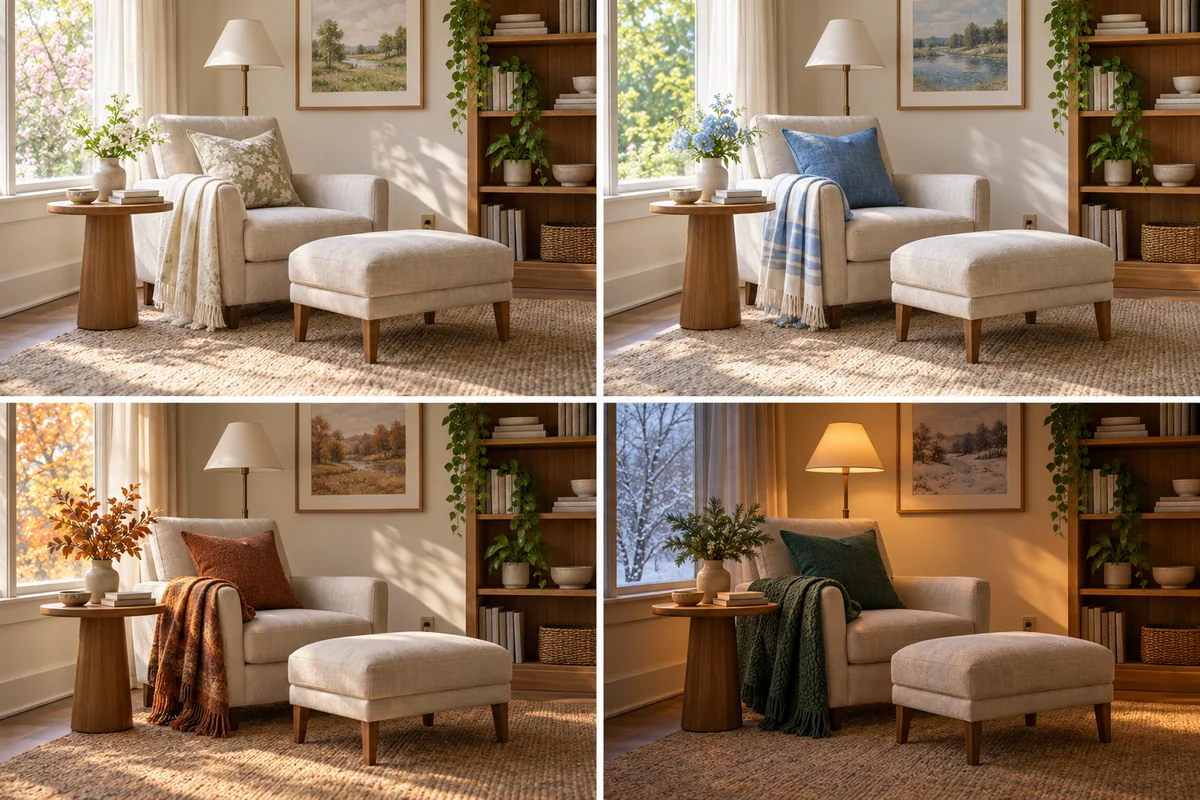
A seasonal refresh does not require four separate sets of decorations. The most useful seasonal home decorating ideas change a room's texture, color emphasis, and everyday comfort while keeping its important furniture and useful objects in place. Think of a small adaptable collection rather than a shopping list that restarts every few months.
Follow the conditions where you live. Spring, summer, fall, and winter do not occur in the same months in the Northern and Southern Hemispheres, and local weather may not follow a neat four-season pattern. A dry or wet season, a long warm period, or a brief cold spell can be a more useful prompt than a calendar date. Adjust the room to the light and routines you actually experience.
Establish a year-round base before rotating details
Keep the furniture, main lighting, storage, and large surfaces chosen for their ongoing usefulness. A seasonal layer should not make the room harder to move through or require relocating several essential objects. Choose a few flexible points of change, such as cushion covers, a throw, a small artwork, or a tabletop arrangement.
Identify what the season changes for your household. You may read indoors more, use an outdoor space, need a different blanket, or carry wet footwear through the entrance. These practical shifts provide a better decorating brief than a generic collection of seasonal motifs.
Select a limited group of reusable objects that can change role. A plain vessel, a tray, simple frames, and textiles with compatible colors can support several arrangements. You do not need every item to appear at once. Store the unused pieces appropriately so the current room has enough useful empty surface.
Spring: clear the view and lighten the texture
Begin with the room's light and surfaces. Move temporary clutter away from a window, clean according to the relevant product instructions, and reassess whether the usual arrangement still supports the household. A clearer landing surface or reading corner can feel fresh without adding a single decorative object.
Try one lighter textile if it suits the weather and your comfort. A plain cotton cover or a softer muted color can change the impression of a seat while the substantial furniture stays. Do not remove a useful warm layer simply because the season name suggests that the room should look airy.
Color can come through a small personal arrangement rather than a themed display. An artwork with a pale green or blue note, a simple fabric, or a vessel you already own may be sufficient. If you use plants or cut material, choose species appropriate to the household and consider pets, allergies, care, and the source of the material.
Leave space around the new detail. Spring decorating often becomes less effective when every cleared surface receives a fresh group of small objects. Let the useful surface remain useful. The change can be a reduction in visual density rather than a replacement collection.
A modest spring reset
For a hypothetical living room, keep the sofa and rug, store one heavy decorative cushion, bring out a washable light cover, and move a small artwork where daylight reveals it. Reassess the view from the entrance. If the room already feels clearer, stop before adding further items simply to complete a theme.
Summer: simplify around how the room is used
Warm-season styling can emphasize easy care, lighter-looking textiles, and the connection between indoors and outdoors where that is appropriate. These visual changes do not replace actual temperature control, suitable shading, or ventilation arrangements. A blue cushion can suggest freshness, but it does not cool the room physically.
Choose fabrics according to use and cleaning requirements. If doors open more often or the room connects to an outdoor area, think about dust, moisture, and the storage of everyday items. A practical tray for frequently moved objects may be more useful than a fragile tabletop arrangement.
Keep daylight management responsive to the room. Light curtains may soften a view, but privacy, glare, and the building's conditions still matter. Do not remove a needed layer simply because a summer photograph shows a bare window. Work with the treatments and instructions suited to your home.
Introduce color in one manageable place. Muted blue, a clear green, or a natural textile can change the room's emphasis without a complete palette shift. Compare it with the existing upholstery and floor, and let the surrounding objects remain relatively restrained.
Plan for casual gatherings
Check where drinks, books, and small serving items can be placed before adding decorative pieces. If you move occasional seating in and out, provide an appropriate location when it is not in use. A seasonal arrangement should accommodate people, not require dismantling before anyone can sit down.
Fall: add depth through a useful layer
As routines shift toward more indoor time, review the seat and surfaces you use most. A warmer blanket within reach, a different cushion texture, or a more useful lamp position can change the experience. Choose the layer because it improves comfort rather than because every room is expected to become orange.
Rust, deeper green, tobacco, plum, and muted brown can all provide seasonal depth, depending on the existing palette. Use one or two as accents rather than replacing every visible textile. An existing patterned rug may already contain a color that can be drawn forward with a small addition.
Natural-looking objects deserve the same practical judgment as purchased decorations. Avoid obstructing a surface with materials that shed, stain, or cannot be appropriately maintained. Keep heat sources and product care instructions in mind, and do not assume an informal arrangement needs no attention because it looks rustic.
Our cozy home ideas on a budget prioritize the existing possessions and small changes that support daily comfort. Apply that method before buying a seasonal collection. A single useful textile may do more than several decorative items with no ongoing role.
Change the emphasis rather than the entire palette
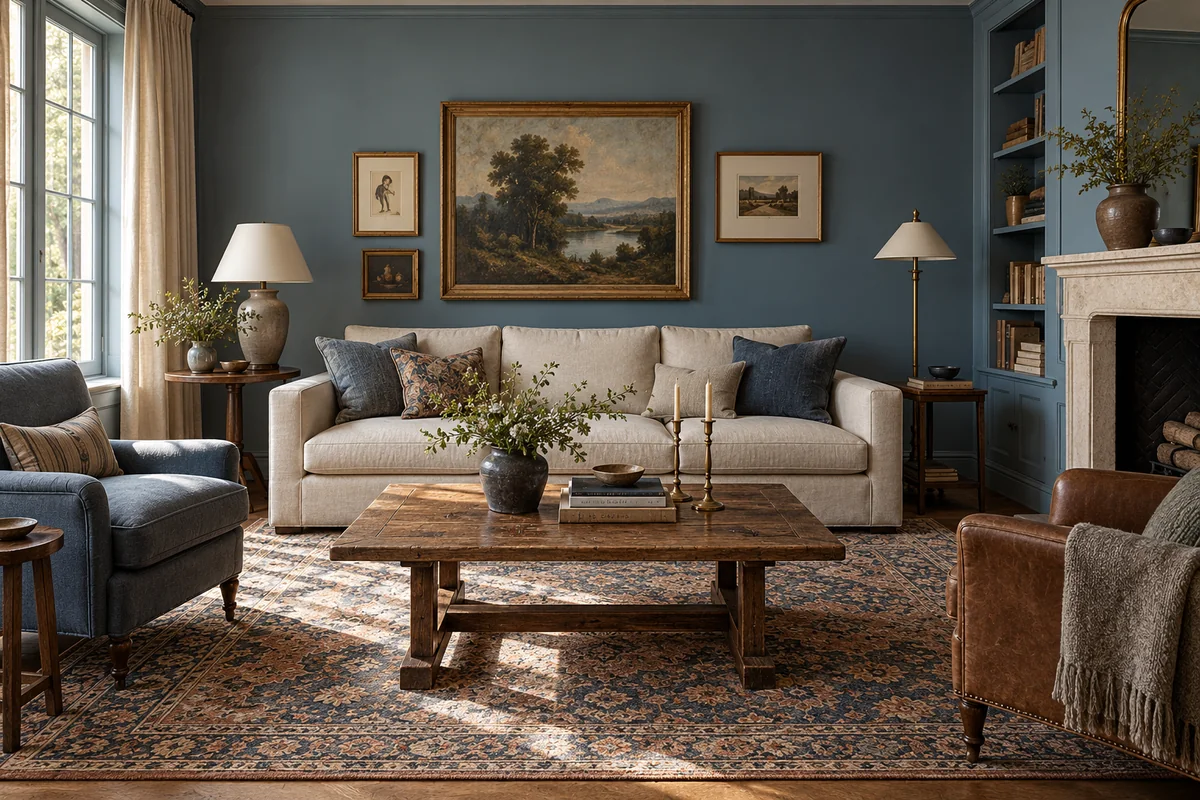
Imagine a room that already combines cream upholstery, timber, and muted blue. A rust throw can bring forward the timber's warmth while the blue remains. The result can feel seasonally different without suggesting that the room must abandon its established character for several months.
Winter: bring attention to evening comfort
Look at the room after dark, when its usual daylight relationships no longer apply. A comfortable seat may need better reading light or a nearby surface. A room can feel more settled when its useful areas are illuminated and bright sources are kept out of the usual line of sight.
Our bedroom lighting guide explains ambient, task, and accent light. Those distinctions can inform a winter sitting area too. Check bulb, fitting, and control compatibility, keep cords out of circulation routes, and use appropriate professional help for electrical changes rather than improvising a seasonal installation.
Choose textiles according to actual comfort, not just thickness in a photograph. A manageable blanket, cushion, or appropriate rug can bring softness. Keep cleaning and storage in mind, particularly if the household includes pets or if the room handles wet outdoor clothing.
Personal objects can become part of the evening view. Bring a favorite book or a small artwork into a useful location, while leaving space for the activities happening there. Seasonal decorating does not require a holiday theme, and different households can celebrate or avoid particular motifs according to their own preferences.
Keep warmth separate from unsafe shortcuts
Decorative changes should not obstruct heaters, vents, or required access. Follow instructions for any heating or electrical product. Avoid placing textiles over lights or introducing open flames as a substitute for appropriate illumination. A cozy effect should remain compatible with the room's ordinary safe use.
Build a small reusable seasonal collection
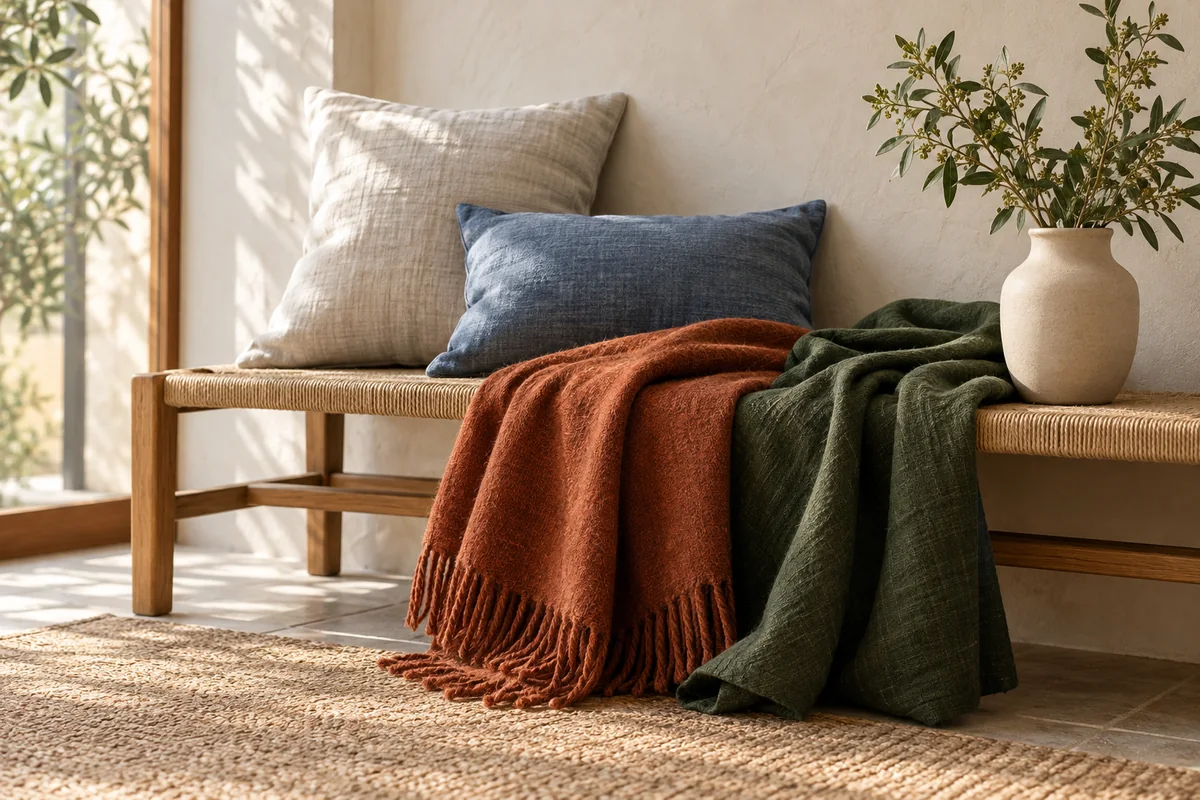
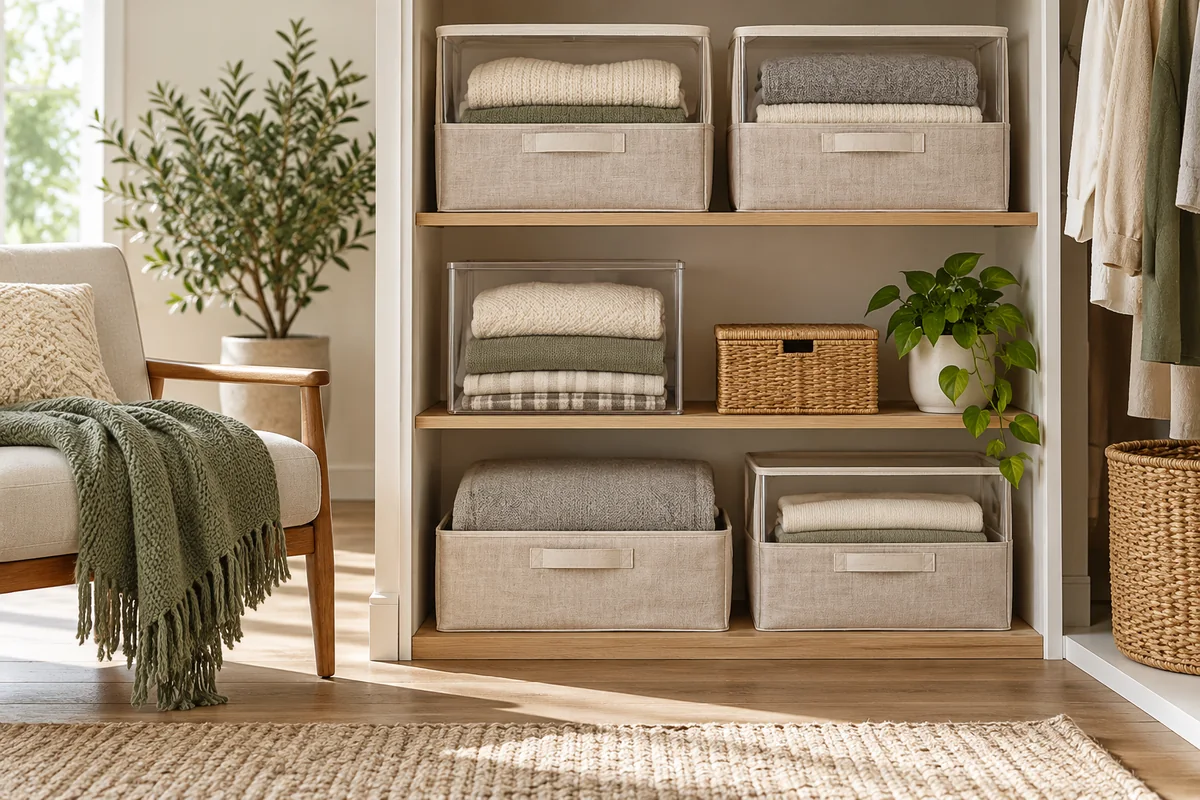
Choose pieces that can work in more than one season. A plain ceramic vessel can hold an appropriate arrangement or remain empty; a timber tray can group daily essentials; a rust textile may suit fall or a warm summer palette. Use changes in combination rather than relying on season-specific objects for every update.
Keep the collection limited by the storage you can reasonably provide. Covers can be easier to rotate than complete cushions, if the inserts and sizes remain compatible. Label storage for retrieval in a simple way and avoid packing items so tightly that removing one requires emptying the whole container.
Our timeless home decor ideas focus on adaptable larger choices. The same principle applies to the seasonal layer: select things you will still enjoy without the season name attached. That makes the collection more useful and reduces pressure to buy replacements each year.
Make the transition a short household reset
Before storing textiles or objects, clean and dry them according to their care requirements. Choose storage appropriate to the material and location. Keep fragile objects protected and frequently reused items reachable. A damp or unsuitable storage area can undermine a carefully chosen collection.
Record what actually worked. If a throw stayed in constant use, keep it in the next rotation. If a decorative arrangement repeatedly had to move, simplify it or choose another location. This practical feedback is more useful than recreating the same arrangement simply because it was labeled seasonal.
Change one or two relationships at a time and let the room remain recognizable. The goal is a home that responds to its light, weather, and routines, with enough continuity to feel personal throughout the year. Seasonal freshness can come from paying attention rather than starting over.
Images are AI-generated design illustrations, not photographs of documented projects. Conceptual layout illustrations are not measured plans.
About editorial attribution ↗